What, how & why bother?

Inspiring & motivating your hybrid sales team.
By Amanda Downs, Uspire Director of Commercial Leadership

(N.B. – this article was first published in 2021, and some of the references refer to the challenges of the time, post-COVID. However, the What, How, Why Bother model remains relevant for leaders today)

Here at Uspire, one of our principles of success is that everybody in your Company is responsible for sales and business success; it’s not just people with ‘sales’ in their title. Customers are more precious than ever, and under exceptional circumstances we must understand what support our people need to able to show up strongly for our customers.

I’ve been honoured to have coached several senior leaders recently, from sales through to finance, supply chain and IT. In every conversation, the challenge has been around how to redress the over-focus on task and the increased feeling of a work/life overload.  Here are some of the things they are saying:

“ I need to keep us focused on delivering the numbers”

“ My team seem de-moralised, yet what can I do? We’re stuck at home, and I’m on calls all day”

“ Our meetings are action-focused, we keep them tight and as short as possible, no time for chit-chat”

“ There is so much to do, I’m back in the weeds”

We’ve also had the privilege of coaching over two hundred “team members’, in Food, Pharma, Fin-tech, Medical &  retail sectors. Here are some of the things they are saying:

“ I haven’t properly spoken to my manager in ages, its all work”

“ I’m in calls all day and haven’t got time to do my work, I can’t switch off”

“ I honestly don’t know how we are going to meet our targets”

“ I don’t really know what our directors are doing, I never hear anything”

The leadership priority is singular. We must make sure that our people are clear, enabled & happy before focusing on the must-do tasks and outcomes. This is challenging enough in normal circumstances. Nearly halfway through 2021 it might feel somewhat overwhelming.

As the world gradually emerges from its cocooned existence into a new hybrid way of working, so must our leadership. How do we ensure that we are showing up for our teams and all of our stakeholders in the best possible way?

Uspire partner, Kate Turner, in her book ‘Create Motivation” says that we must lead not just the “what’ of day-to-day tasks, targets and action plans, but also in the bigger why; the longer-term vision and goals for your business. Kate’s ‘Performance Triangle’ has two more points: The “ How” and the ‘Why Bother”. These 3 elements may have changed irreversibly.
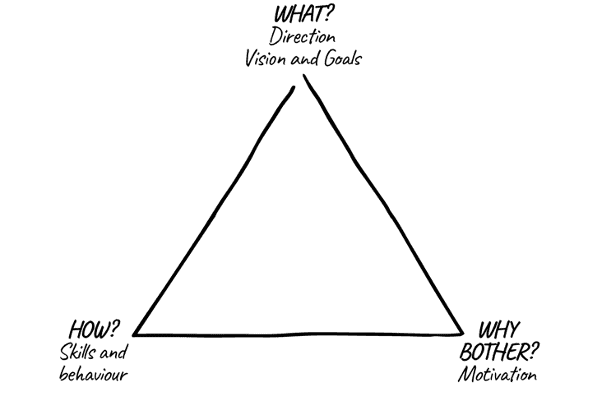
Here is our advice on how to make sure that you are empowering yourself and your people.

WHAT? – Direction, Vision & Goals.

The First ‘What” – business vision & strategy
There are two types of ‘What” for a leader. The first is the day-to-day task of creating, championing and maintaining direction.

No organisation has escaped the need to pivot in some way. We have written 9 blogs in the last year on the topic of managing significant change alone. If you want to check that your strategy is robust here: Grow with S.U.C.C.E.S.S in Covid Recovery Seasons 3 & 4 . For a checklist on visioning, mobilising, developing & enabling commercial change, read here: Leading Significant Change .

The Second What – operationalising your values.
This is a very personal ”What” indeed. If you need your sales team to personify your business brand, then your own leadership brand is under scrutiny. How are you showing up? As the old Ronseal strapline went, do you “do what it says on the tin”? There is no greater builder of trust, and inspiration with customers or with teams, than to know your own values and live them consistently. Read  The Three Ds Of Personal Branding for more on creating your leadership brand.

At Uspire, we’re inspired by the work of Brene Brown. Her research and writings on leadership have been game-changing for me, and her book “Dare To Lead” is my top recommendation for every leader. One of my most profound learnings from the book has been to ‘operationalise’ my values.

It has helped me to speak out when I have a different view to my client, to not interrupt (a Yellow/Red Energy flaw that is a work-in-progress, particularly in the virtual world) and to have the courage to seek feedback, even when I don’t want to hear it.

A value is a principle or a way of living that we hold most important. When our values are clear , they are not a ‘management exercise’, they deeply define who we are. I’ve been involved in many corporate values workshops over the years. Some end up on meeting room walls and go nowhere. Interestingly, Brene recommends that we decide on just two core personal values. Why not revisit them as they may change over time. ‘Two’s not enough’, I hear you say,  ‘It won’t cover my wonderfulness” ????

Operationalising your values simply means that you consistently take actions that live up to your two  values. After much thinking, and returning to my core six, I’ve recently firmed up my two values. We did this in a Board workshop. It was a moving experience. Once you decide your two, you realise that living into them, consistently and with impact, is a life’s work. That’s why two is enough???????? Here are mine, fresh from the virtual workshop:
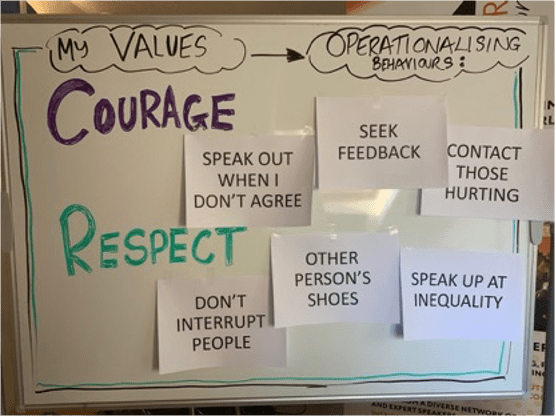
Brene’s research (I’ve attended a workshop she ran in New York so she’s on first name terms in my mind at least) shows that only 10% of organisations can say that they genuinely operationalise their values. These organisations have higher productivity, more engaged people & less staff turnover.

One of the fundamental side-effects of ‘doing what it says on the tin’ with consistency and authenticity, is trust. When I was a Commercial Director in the food sector I remember some pretty big ‘ding dongs’ with retailers. They were almost always to do with money; price increases, price queries, unsolicited deductions, failure to deliver or favouring a competitor; you know the sort of thing.

If my values had been firm and operationalised, I would have managed those situations very differently. I must have been growing into them though, as I am still connected to many of those adversaries; one actually gave me a job a year later, and I’ve scheduled to see his family later this year, COVID-willing.

What are your top two values and what do you need to do to operationalize them with your customers? If you’d like to do the exercise for yourself and your team get in touch with me and book a hugely reflective and valuable 2-hour virtual session.

HOW? – Skills & Behaviour

All good leaders know that sales teams are energised and motivated by skills development. A Salesforce survey last year found that 78% of sales people were fearful of approaching customers whilst they were home-working. We are proud to say that all of our clients have chosen to continue to energise and inspire their teams through virtual classrooms and blended learning. Some took a while to be convinced that it would work, some jumped straight in.

Most of our training, like the selling done by our client teams, was face-to-face up until March 2020. Uspire’s trainers were away coaching teams all over the world. Early March 2020 saw our diaries emptied, as one client after another took the wise decision to keep their teams safe. The same happened for our client’s sales teams. As Lockdown 1.0 kicked in, we were kicking our heels until we seized the chance to upskill ourselves and our global training partners.

In May, we were all awarded accreditation as ILM Virtual Trainers and something wonderful happened. We pivoted. We realized that salespeople and their leaders were struggling to connect with customers. The training that we had received was exactly what sales teams needed. We learned to Zoom, we raided Amazon for home flip charts, light rings, posters & pens. We created short, virtual sessions to replace classroom workshops, we taught teams how to be as impactful, and sometimes even more than F2F. We trained and retrained Colourful Connecting especially with customers under stress. Our more popular programmes now are How to Sell From Home and Presenting With Virtual Impact.

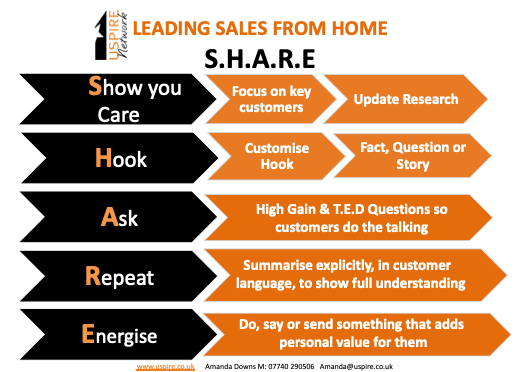
Here is our S.H.A.R.E Selling Model, you can read more here: Leading Sales From Home
My next recommendation to you as a leader seeking to inspire your team is to use Colour Energy psychometrics. As a Commercial Director for United Biscuits Ireland, I returned to this awareness and influencing tool time and time again. We’d use the Team Colour Wheel as a ‘go to’ poster when preparing retailer pitches.

If you haven’t used this tool, then we are here to help Here are our most frequently used tips for sales teams to connect and flex with each other and customers.
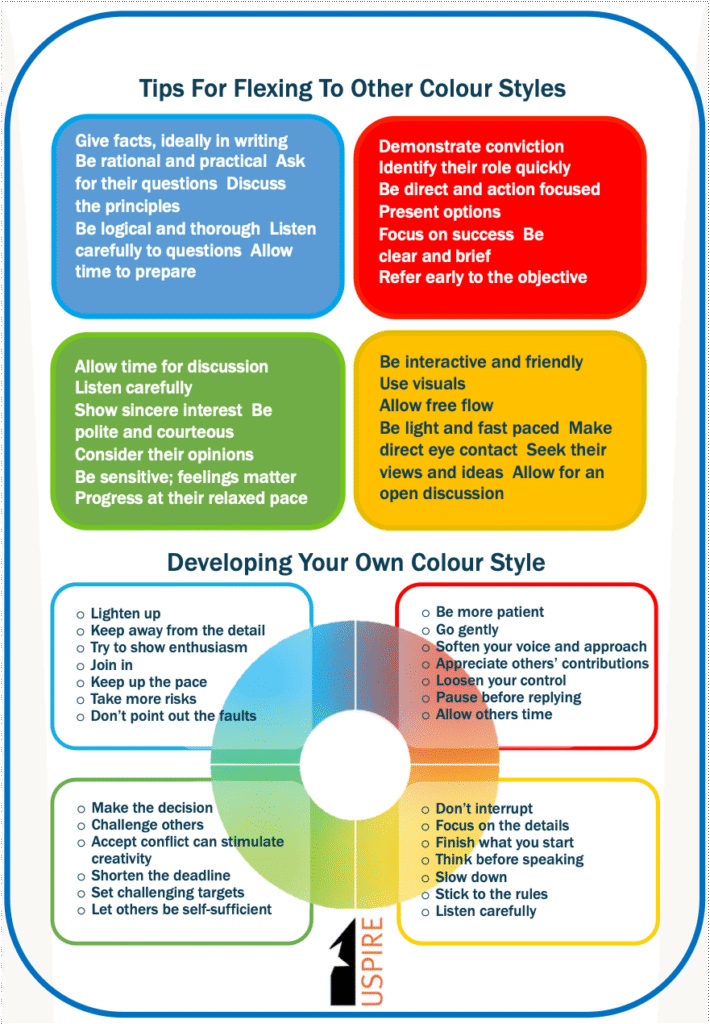
WHY BOTHER? – Motivating yourself & your team

Clarity of direction, alignment with the long-term vision and establishing greater competence are no match for this final point on the Performance Triangle. If you haven’t nailed the ‘why bother’? question you can forget the rest!

One of my best coaching assignments was a few years ago, with the sales director of a SAAS company in London.  Ten minutes into the goal-setting stage of our first meeting I realized he didn’t want to be there. As I found out, he was lined up to be the next MD, with training, mentors, coaches, the lot. This 30-something talent really just wanted to take a year out, travel, jump off cliffs and learn to fly a drone camera.  ” What’s stopping you?” said his coach. Six years later my coachee runs a successful SAAS business from Thailand having jumped, travelled, met, wed and become a father on the journey.

The Performance Triangle falls over without focus on Motivation.

Ask yourself and each team member “ Why do you do what you do?”

If we ask the right questions and listen with a curiosity to understand, we uncover what gets us and others out of bed.

It is a common misconception that it’s the job of the leader to motivate a team, or that salespeople are only driven by incentives. That’s not my experience at all. It is however, your job as a leader to encourage team members to understand and work on their own motivators.

At Uspire we use Colour Profiling to help individuals and teams understand their style preferences and how to flex to them to each customer style. Jungian-based psychometrics describe personality style which comes from past experience. Barring significant trauma, style is mostly fixed and exhibited in our daily, unconscious behaviour. Motivation however, comes from a view of the future and it often changes.

Motivational Mapping is one of the best tools I’ve seen, to create a common language and to encourage conversation around motivation. The Motivational Map assessment measures your motivation at a moment in time, because it changes, and boy, has motivation changed for teams this year! One of the most powerful tools for a leader is to see a ‘Team Motivational Map’ every year.  It’s like a personal engagement survey.
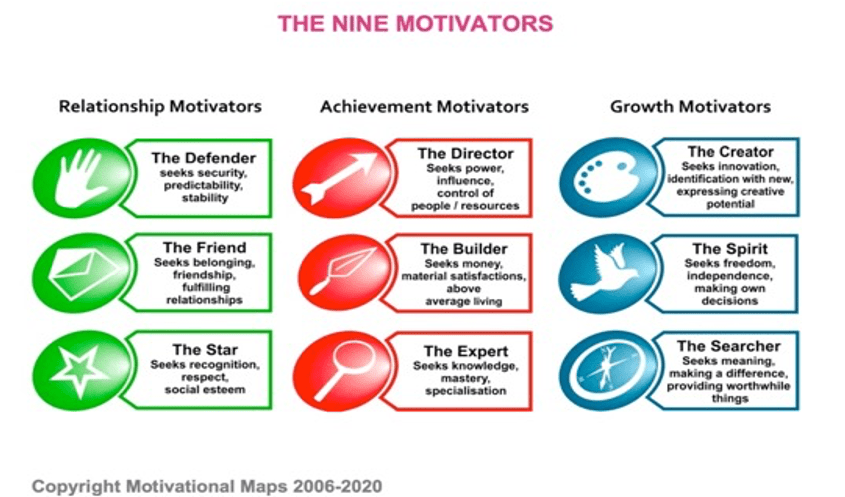
I have completed my own Motivational map every year for the last 5 years. Unlike my Colour profile which remains constant, my Nine Motivators have moved.

Understanding my own mix of motivational drivers has helped me to choose activities that energise me. As a member of our business development team, for example I know that I am energized by being involved in creating new products, as long as there is a deadline.
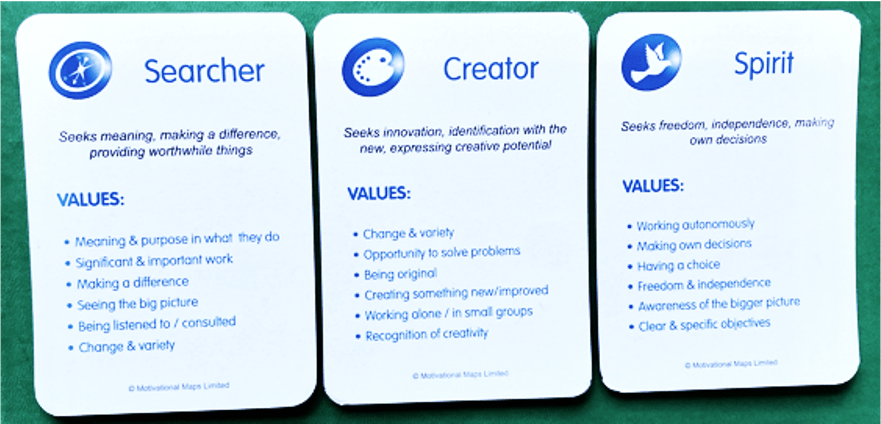
A Final Thought from Kate’s book Creating Motivation

If you and your team would value your own Motivational Maps, please get in touch.

Amanda is our Director of Commercial Leasdership at Uspire.

She is a  keynote speaker, board facilitator and commercial leadership coach.

To get in touch email her direct amanda@theuspiregroup.com

Uspire are accredited practitioners in the following leadership & team development tools
Managing Stress – The Chemistry of Performance

Membership of the Uspire Network grants access to the Uspire Keynote Speakers, a collection of subject-matter experts who share their experience and insights with Network members. Uspire invited Sue Firth, Psychologist, to speak with our members about how to understand and deal with stress.

Managing Stress

Are you feeling stressed right now? Is adrenaline fueling your system and making you feel a little anxious and uncomfortably alert? The fact you are reading this suggests probably not. You are in a reflective phase maybe, and, as reading is known to relax, your body chemistry is probably in a nice state of calm.

But has stress been playing with you today? Maybe you felt a little grumpy at the dinner table or were a tad short-tempered in your team zoom call? Stress is not uncommon, coming in all shapes and sizes and is so widespread that, according to the HSE, 11 million work days per year are lost to stress. Indeed, it has become such a concern that it is now a legal duty for employers to protect their employees from stress. So, understanding stress and managing it is of particular importance to leaders who not only need to recognise their own stress levels but must also be on the lookout for the tell-tale signs in their teams.

Sue Firth is an expert on stress. A stress guru who understands the chemistry at play as you swing between mood states throughout the day. And to help our Network members get a grip on their own stress as well as that faced by their team, she was invited to be our Keynote Speaker as the latest Uspire Network event.

The Chemistry of Performance

To explain the underlying chemical reactions that people experience as they face stress Sue focuses much of her session on her Chemistry of Performance map; a fantastically simple but hugely useful quadratic grid that allows you to understand why you may feel the way you do.  There are four main chemicals involved in the manifestation of mood and subsequent performance –  adrenaline which keeps you active and alert, serotonin which relaxes, DHEA which makes you happy, and cortisol which makes you sad. A rather simplistic overview but when mapped on the poles of the Chemistry of Performance they help explain movement between the quadrants.

The y axis takes you from relaxed to active, whilst the x axis dissects the active line and takes you from happy on the right to unhappy on then left. Where your mood places you is partly explained by the influence of these chemicals and their reaction to the environmental circumstances you may find yourself in.

The quadrant most associated with proactivity and high performance is top right: busy and feeling good, fuelled by a mix of adrenaline and DHEA. Being in this space is energising and motivating and being here can help you make great things happen.

However, you simply can’t be in here all the time, it’s just too intense for you and your team. You need to spend some time in the bottom right quadrant and unwind properly so that you can benefit from being happy and relaxed. In this space you will feel calmer, fulfilled and reflective, and it is this space that is associated with the feel-good chemical Serotonin. The secret to spending quality time in this space is knowing what gets you in here, and Sue gives some great advice on how to do just that.

Counter-clockwise into top left, busy/unhappy, is the precursor to stress; high adrenaline but overly active cortisol. Cortisol helps us begin our days and gets us out of bed, but should naturally dissipate throughout the day. As we get stressed and react we create spikes in cortisol which can cause tiredness and impact our mood making us frustrated, angry and bad tempered; wired and tired.

Bottom left is the place we should be wary of. A dangerous mix of cortisol and serotonin responding to negativity, anxiety and withdrawal. We should be conscious of ourselves or members of our team spending too long in this space.

This is a whirlwind review of a quite a complex subject, and indeed stress is not all bad. It can in fact be a good thing as our bodies naturally respond well to increased pressure by motivating us to perform. The trick in life is determining how to stay positively thriving on it rather than drowning in it.

If you would like access to Sue Firth’s excellent talk on understanding and managing stress then contact joanne@uspire.co.uk.

The Uspire Network – a unique blend of business coaching, peer to peer learning and thought-provoking events.

The Uspire Network supports high potential commercial leaders seeking to step into future C-suite roles. Bringing the outside in, The Uspire Network focuses on delivering tangible business results whilst creating and nurturing high performing talent. To learn more down the Uspire Network 2021 Programme.

Avoid the isolation of remote working with your EQ credo and lessons from Defoe and Mr Wilson

During the next few months, we will be focussing on increasing your self-awareness as a leader. We began with an excellent network session on leading with emotional intelligence (EQ) rather than intellect (IQ).  This provocation helped us to understand the 5 dimensions and 15 realms of this capability it will also assist leaders to unlock their empathy and humility.

The Covid pandemic has been one of the most challenging periods for executives and many have risen to this crisis and by necessity elevated their organisations with agile and ingenious solutions. They have embraced collaboration and peer-to-peer networks but most importantly they learned to recalibrate HOW the business should do things not just what it does.

However, as we move through this second period of lockdown many are still grappling with the emotional challenges of employee remote working and from observing early productivity increases they are now experiencing declining effectiveness and reduced levels of morale across the virtual team environment.

A majority of these concerns are outlined below:-

  • People can easily be distracted at home and it is much harder to establish the right “mindset” and prioritise work appropriately.
  • Without significant effort, communications can be disparate, and individuals can be left out of the loop.
  • Creativity can be lost because of the absence of information exchange and the spontaneous brainstorming with colleagues around the coffee machine.
  • Company culture comes under strain because people don’t feel part of a face-to-face community and it becomes difficult to effectively induct new employees.
  • Individuals depending on their personal circumstances can become lonely and isolated and the potential for mental health issues amongst this group of remote workers is greatly increased.

In fact, it’s this feeling of isolation and loneliness that can be the most damaging to the company performance and the self esteem of the executive group.

We all need a level of human interaction to keep us sane and when we are in lockdown and perhaps even living alone, which some of your employees will be, to prevent the rapid decline of mental health.

To understand the seriousness of this more fully, we can explore some interesting characters from literature.

It was poet John Donne, after a period of confinement, who wrote, “sustained solitude is a torment which is not threatened in hell itself.” Loneliness is a fairly modern concept but the period of isolation from our colleagues at work and some members of our family is much more aligned with John Donne’s definition of solitude.

If we reflect on Daniel Defoe’s novel Robinson Crusoe where he endures 28 years on an uninhabited island, which might sound excessive when compared to the Covid lockdown, but my argument is that our modern pace of life and constant access to the stimulus of others can mentally make 3 months seem like 3 years which is made worse by the media one minute releasing positive data and the next more bad news. This period is also littered with false dawns, like the moment when Crusoe discovers a shipwreck near the island but none of the crew survived. He breaks down for the first time in the book and cries out “oh if only there had been one soul saved out of this ship, then I might have had one fellow creature to have spoken to me and to have conversed with!” For many the second lockdown is a parallel to this false dawn with an unexpected extension to isolation.

[A slight digression, but when Robinson Crusoe finally, after 25 years, encounters Friday, he has slightly muted excitement. But more importantly in today’s society the novel, written in 1623, was the first non-white character to be given a realistic, humane, and individual strength of a character in an English novel. The book then creates what could only be described as the beginning of the classic racial divide, when Crusoe teaches him to call him “master”, which makes Friday an enduring political symbol of racial injustice right at the beginning of an imperialist expansion which today is gradually but effectively been addressed.]

Let’s lighten the moment with Tom Hanks in isolation and what should have been an Oscar winning performance from Mr Wilson (the volleyball). The moment most people are waiting for during the lockdown is the arrival of an online shopping parcel, Mr Wilson washes up on the island in a FedEx box. What Castaway portrays brilliantly is the deep belief and truth about the irrepressibly social nature of human beings. Without this contact, our mental health deteriorates to the point of anchoring connection with inanimate objects.

At the beginning of the movie “Room” lead character Jack wakes up in the shed where he’d spent every minute of his life in captivity and greets his best friends. “Good morning, wardrobe. Good morning, TV. Good morning sink. Good morning toilet. Good morning all.” For some people it’s hard not to feel like Jack these days, with household objects becoming increasingly familiar.

So as leaders, how do we avoid this terrifying description of isolation or sustained solitude? A recent survey in America, where they are more willing to open up about mental health issues, suggested that 41% of people are struggling with mental health conditions as a result of the Covid-19 pandemic, and many companies are failing to address the problem. How many of you are writing emails or sending text messages beginning with “hope you are well” knowing many people are not well? Or receiving and sending replies like “ok thank you” or “I’m fine” which hide how people are really feeling.

Whilst we all hope that the emergence of vaccines will solve the problem, the reality is that significant damage can occur over the next 6-9 months. We need to act now and accept that more must be done to provide security, connectivity, and a real sense of belonging. How can we achieve this when a majority of our communication is done virtually? Many organisations are planning to make home virtual working part of the future, so we must surely all improve our approach.

One of the most fundamental starting points is to build a connection and create a virtual community. This is all about how much people understand what is happening in the company and establishing a culture of “care” for what the business is doing, but most importantly how it does it.  Often described as “one team, one goal” mindset that unites everybody and encourages cooperation and collaboration.

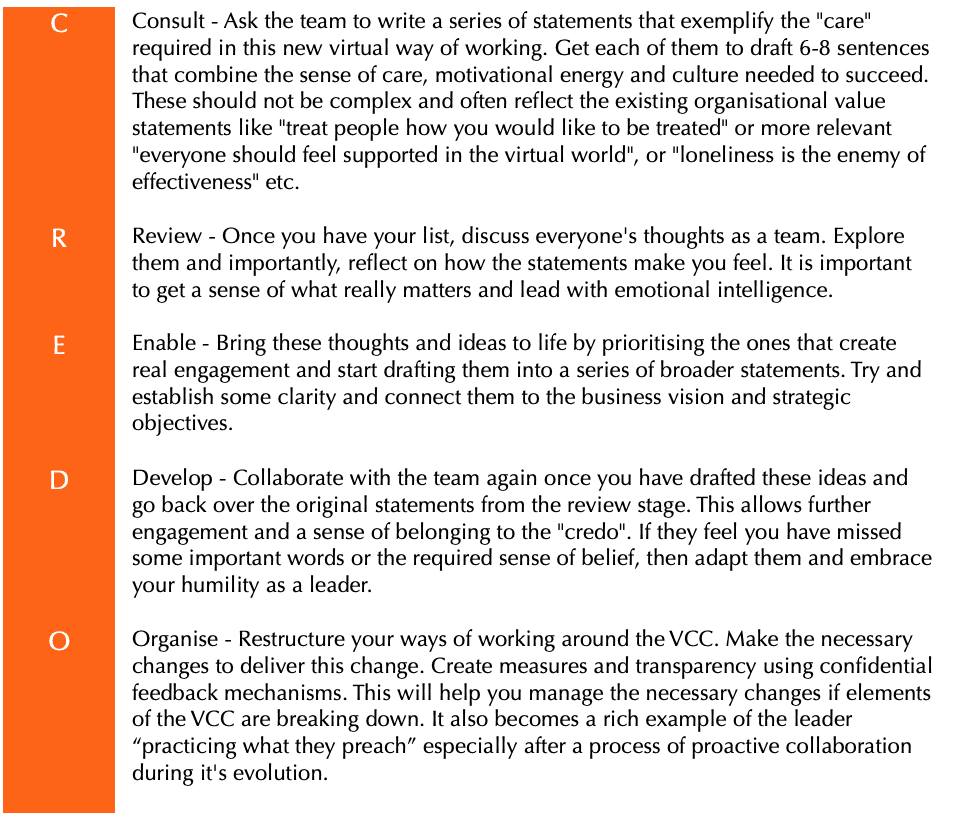
Here at Uspire Network we have created a process called your Virtual Care Credo or VCC. This is an engaging purpose for this new way of working and it has four components and five steps:-

  1. How do you want people to feel during this evolution and transition to virtual working?
  2. Defining what the business should be doing for its people?
  3. How to make people enjoy reaching out to the broader team and helping to keep everyone engaged?
  4. How to keep everyone focussed on the business vision and outcomes required to succeed?

Let’s now look at the five steps to create your VCC.

Once you have developed your VCC, the next important step is to address any loss of team spirit. It’s difficult to build a “three musketeer” environment when people are highly functional over Zoom or communicating via a series of disjointed emails.

As a leader trying to master virtual interaction, you must establish a compelling direction for your team. You can only do this by checking with everyone individually to ensure they are connected to the business strategy. At this point the objectives that underpin the strategy should be distributed throughout the team. A good technique to encourage full team participation remotely is to rotate the chairman for meetings. It’s also important to agree the team goals that can only be delivered successfully by working together.

One of the biggest mistakes leaders are making right now is just because everyone is working from home, does not mean they are available all the time. People still schedule meetings, calls and downtime the same way they would if they were in the office.  Don’t assume they are just doing nothing waiting for your call.

To maintain high levels of morale amongst virtual teams the Uspire Network has also developed a 15-point plan for leaders.

  1. Stay connected with others by introducing regular full team contact. Mix it up and try “walk and talk” meetings where everyone gets on a call whilst enjoying some outdoor space and fresh air.
  2. Maintain a strong company message and adapt by introducing your virtual care credo. Continuously reinforce the company vision and strategy. Keep people well informed about any changes in direction.
  3. Build an achievements wall. This enables you to deliver “shout outs” and celebrate success.
  4. Establish a remote work and play culture. (See our summary of creative team building ideas.)
  5. Move learning and development up the agenda. They need it more than ever it’s a sign that the company are investing in them personally.
  6. Take regular team temperature checks using surveys.
  7. Promote “Time to Think” people need gaps in the day for mindfulness or exercise. Create a virtual office breakout room so people can chat during breaks.
  8. Introduce virtual support groups where people can ask for help and discuss issues with colleagues.
  9. Move employee wellness up the agenda. Don’t just say you care make it visible in your actions and resourcing.  Create a “panic button” if someone is showing signs of heightened stress or changes in behaviour react quickly.
  10. Trust them. Just because you cannot see them working should not change your behaviour. Deliver empowerment and be more flexible about how and when they work.
  11. Collaborate with established partners and create joint “hangouts” where you can share challenges, and communicate with trusted employees from other companies.
  12. Support local employee causes, create an identity for the company where your people live and now work. Get them to tell stories of how the company supported and has delivered something significant in the local community.
  13. Have an appropriate sense of humour during difficult periods. You need to become the Vice President of Fun, not just the boss.
  14. Dial up humility, transparency, and empathy by sharing your stories and showing some vulnerability. Also make sure you never miss a birthday or work anniversary of a team member. It will mean a great deal to each individual.
  15. Help everyone get “set up” properly and efficiently. You don’t want your team working from home having to sit on the bed or in a freezing garden shed. Where appropriate, give them a home office allowance.

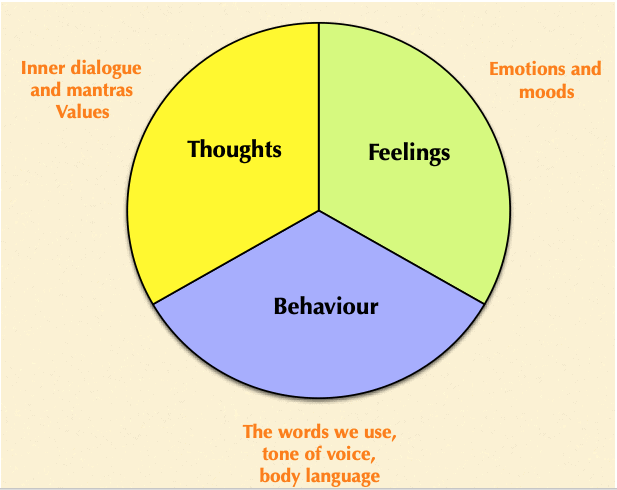
Finally lets refer back to the network session with Lynn Leahy and the importance of building empathy in a virtual world.  She introduced and reminded us of the ‘Mercedes Model’ for looking at the relationships we build both in life and with our teams.

Remember if the conditions in any one of the three segments change then the other two change automatically so the relationships we build and the empathy we are trying to create can be influenced by many variables.  The clear disadvantage following this remotely is the limitations of body language and how people adapt their virtual persona.

So to demonstrate and practice empathy try and repeat back what you have heard to check your understanding.  Ask them to help you to more fully comprehend the situation.  We should never be defensive or dismissive.  Fundamentally we must listen and ask ourselves what are they saying and how are they communicating. Stephen Covey reminds us that ‘Seek first to understand before being understood’.  We constantly need to evolve as a leader because self-actualisation is the oxygen and nourishment that feeds both success and contentment.

Tom Hanks played an obsessive and clock-watching businessman in Castaway.  When on the desert island in isolation he befriends the volleyball, he then jokes with Wilson, confides in Wilson and at one point even kicks him out of the cave like an angry spouse.  When he finally loses his volleyball to the ocean current he cries out, ‘I’m sorry Mr Wilson’!  Look after yourself and your people don’t lose any of the team to the ‘flash flood’ and rapid current of the Covid pandemic.

Creativity and Innovation and the Search for your “Intrapreneurs”

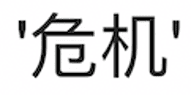
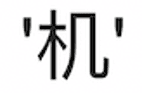
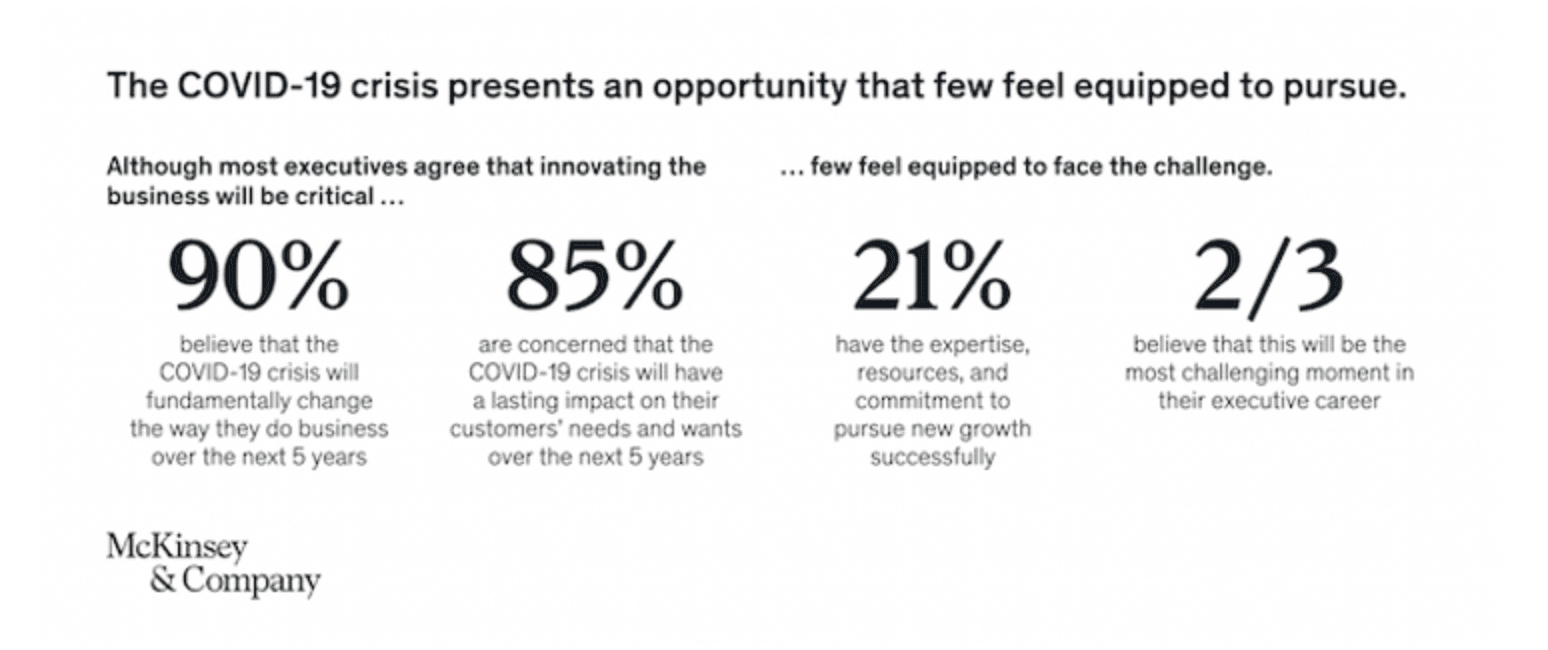
It’s time to reflect again on these unusual times we find ourselves in and our ability to either sustain gains or recover from losses resulting from the pandemic. I read an interesting article from McKinsey recently which talks about unlocking opportunities post the crisis. It also quotes J F Kennedy who inaccurately stated that the Chinese translation for Crisis which consists of two symbols


one meaning danger the other opportunity – It’s not like a politician to bend the meaning of something? The accurate definition is danger and pivot the phrase technically means “the pivot of danger” and this is of course exactly what business needs to do during this transition into the Season 3 of Covid recovery.

The McKinsey survey below argues this point, whilst asking you to consider the business capability.

This is why leadership must embrace the concept of the “Intrapreneur” which we will cover in an up coming Think Tank but also learn how to create the right environment for innovation and creativity.

The article goes on to say that organisations during season 1 and 2 have de-prioritised innovation in favour of shoring up the core business, focusing on the human element and employee safety, exploiting easy opportunities, protecting the balance sheet and reducing risk.

To bounce back and achieve accelerated growth we need to embrace creativity and imagination by driving an innovation culture.  We also need to observe and react to how consumer needs have evolved and resource the organisation in the appropriate business development areas that can enhance revenue generation by exploiting new ideas.

Leaders who are not using the creative right side of the brain or a board that is over loaded with left-brain characters struggle to establish the business model and management practises needed to harness this energy.

Whilst having a yellow and red preference myself my early training and organisational culture was predominantly blue which resulted in an analytical almost command and control style that struggled with this need for innovation.

Here is a true story from my confectionary days…. and how I was forced to adapt.

Creatives once upon a time gave me headaches and anxiety attacks!! I remember the Head of Product and Packaging Design (one of my direct reports) walking through the fields at the back of the head office during business hours in her bare feet.  Shocked at this, I decided to confront her and ask if she was ok? She said look at the meadow flowers, the colours are amazing and the smell is wonderful. “Yes”, I said, somewhat frustratedly, “but why are you out here walking barefoot during working time?” “Oh”, she said, “just searching for inspiration, we have some important designs to complete and I find this clears my mind of unproductive clutter”.  My first instinct back then was to say, “don’t worry, I will free you of all unproductive clutter and give you all the time you need for walking barefoot in the park!”, but in that important gap between stimulus and response something made me find a better choice.  I told her rather than be out here on your own bring your entire team and let them share the experience.

She did just that and it became a regular thing on a sunny day and she starting inviting other departments to help brainstorm new ideas and the teams productivity and quality dramatically increased.  Later in my career I started reading about open workspaces with creative space for people to have breakouts and new stimulus to solve problems.  Ours was a field full of wild flowers and an aberrant creative genius who challenged the old-fashioned company principles.  Embrace your eccentric imaginative characters, give them the freedom to imagine and watch the innovation grow. Create time and space for you and the team to think.

We also recently lost one of the UK’s most famous designers, Terence Conran, who famously said that a designers job is not to imagine the world how it is, but how it should be.  He also argued that business should remember that people whose talents are not exploited become disenchanted and disruptive.

We have clearly read how digital engagement has expanded significantly and this is increasingly becoming a disruptive influence on business models.  So this need to pivot is becoming much more important as we deal with changes to our competitive landscape, new consumer habits, a demand for new ways of working all of which are leading to a requirement for a different operating model in Seasons 3 and 4.

So before we expand on the Uspire Network 12 Leadership Steps for establishing Creativity and Innovation, let’s consider a few great stories and evaluate the WHY.

Not many of you will know that airbnb was created by two men who could not pay their rent so they blew up a couple of mattresses in their front room and charged people for using them. This business now has a higher market capitalisation than some of the major hotel groups; in fact they are valued at over £5bn. How is this business described now….”a communal way to travel by connecting people who have space to spare with those who are looking for a place to stay”.

Uber started as a niche transportation company in San Francisco and now operates in over 80 countries using its seamless application of connecting riders to drivers embracing simplicity and the elimination of bureaucracy.

You may have seen more advertising for Square recently, it only started a few years ago with its increasingly relevant mobile payments portal, which allows everyone to accept contactless transactions via any credit card.  In no time at all they have established relationships with the likes of Starbucks by aiming to simplify commerce and rethinking how companies exchange value.

I also admire Nike and the fact that they are continuously innovating but this is not about creating new running shoes – they clearly do that.  No the story they are now telling internally is how to create new and imaginative digital interactions which customers use to enhance the physical and technical relationship with the brand during everyday life.

We have overwhelming evidence that supports the fact that companies who achieve a culture of innovation and creativity rather than just profit focus, achieve above average returns for shareholders and establish sustainable and exciting companies for their employees. These will also be the businesses that have a culture which is not thrown into chaos in a crisis but it instead sees the opportunity to meet changing customer needs.

We could now easily expand on the production line of innovative companies like Apple and of course 3M although these represent interesting insights are they really helping us to define the changes that companies need to implement. It is important that leaders have an open mind and encourage the generation of new ideas and proposals.  These new perspectives and points of view will allow you to break from traditional and obsolete practises that can hold a company back.

One of leaderships most essential skills in solving new customer problems and establishing a culture of innovation when in itself can be so undefined is to understand what questions to ask.

Albert Einstein famously said, “If I had 20 days to solve a problem I would spend 19 days defining it”.

Take two great examples for reflection:-

  • John F Kennedy, “we are going to put a man on the moon”.
  • Steve Jobs, “create a product that will put a 1000 songs in your pocket”.

Those were clearly great visions but what questions do you need to ask next to turn an idea into winning innovation?

Let’s consider further WHY you need to embrace creativity and innovation – what’s in it for you?

  1. In a majority of markets it is the driving force for revenue growth.
  2. It enables you to evolve and embrace the principles of continuous improvement – conscious innovation is a modern approach.
  3. It allows you to explore new channels and markets.
  4. Brand enhancing both internally and externally.
  5. It helps to create super engagement by encouraging collaboration.
  6. You can attract and retain better quality people.
  7. When internally focused it increases productivity by promoting better, faster and cheaper ways of working.
  8. It can prevent you from becoming a commodity and losing sight of changing customer needs.
  9. It can be a differentiator in establishing your competitive edge.
  10. Most countries allow you to get tax incentives for new original ideas.

If the benefits are so clear then you need to create the leadership framework for this successful application of great practise.

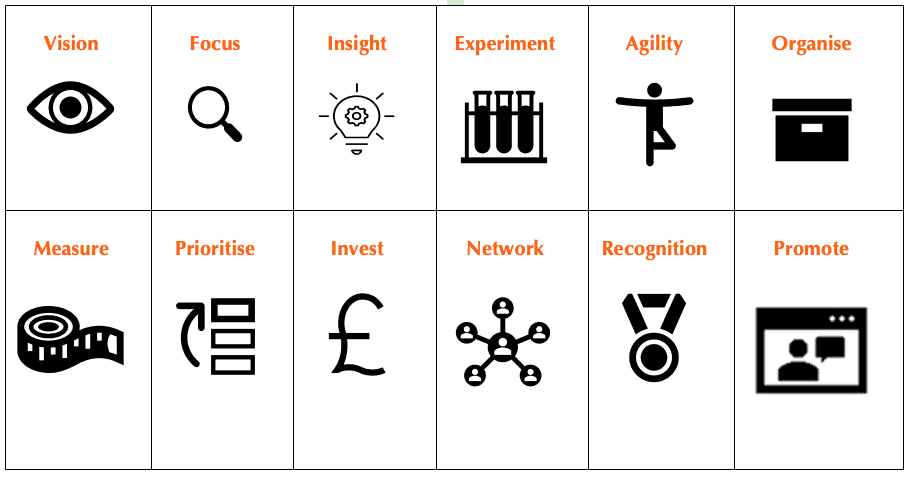
12 Leadership Steps to Establish a Culture of Creativity and Innovation

Vision

At the core of the leadership agenda should be the acceptance that innovation and stimulating organisational creativity is a driver for growth.  Leadership must build a team of creative individuals with the right mindset.

Focus

If the vision exists how do you then focus your innovation activity, are you achieving the appropriate equilibrium of new ideas and core business activity.

Insight

The company intelligence and research functions are directed at market opportunities that involve creative solutions and innovation. Are they providing the innovations with useful information that can be translated into revenue or efficiency driven concepts?

Experiment

The executive team need to create new ways of servicing the market and be prepared to take tactical risks with new business models and channels.

Agility

When insight is identifying changes to the market and customer behaviour or observing changes with your competitive benchmark, are you prepared to move quickly? Leadership need to enable the business to operate with agility if the opportunity presents itself how do you establish first mover advantage.

Organise

To move with agility the leadership team must consistently address the application of resources and define the most appropriate organisational design.

Measure

Leadership must understand the real value of innovative opportunities. How have the financial functions or decision support team structured themselves? Have they analysed and agreed the most effective measurement of a “good idea”?

Prioritise

How are ideas evaluated – measurement is essential but balancing resources and calculating the impact assessment across the organisation is just as critical. Think about the size of the opportunity compared to the ease of implementation!

Invest

Leadership allocate financial resources and budgets for new innovation. This is done with the expectation that “not every egg is a chicken”. When the experimental phase is completed then significant investment goes into making the new opportunity a success.

Network

The leadership team actively promote collaboration and joint ventures that can originate or mobilise innovation. They see the advantage of working with others and will seek to establish relationships with a diverse range of industries to promote shared learning experiences.

Recognition

Everyone is motivated by working on creative and innovative business solutions. It is an area of recognition and the reward structure enables people to share the success of new ideas.

Promotion

Leadership need to constantly tell the stories of success that fuel the organisation to achieve more. Progress not necessarily perfection is acknowledged and all stakeholders understand the innovations that will secure tomorrows revenue.

Although the simplistic definition of innovation is “creation of something new”, without this creativity we only have what we have.  So without something new then there will be no progress.  If your company is not making progress or standing still then in reality it is going backwards and ultimately it will become irrelevant and unsustainable.

The finest commercial leaders mobilise a culture of creativity and innovation and achieve above average financial returns.

Colin Wright is the Chair of the Uspire Network. To find out more how The Network can help you become the best leader you can be contact Colin for a confidential chat.

Will the 70/20/10 learning model work for your organization or is it a “Paper Tiger”?

The 70/20/10 learning model, developed by the Centre For Creative Leadership, aims to help employees embed improved behaviours into their daily work routine faster by using a blend of three types of learning.

70% of learning happens on the job – by trying the new skills, observing what works and what doesn’t, adjusting their approach until eventually their skills improve along with their results.

20% comes from interacting with colleagues and others outside of their immediate work environment – watching how others do it, copying their approaches and discussing what works and input from their manager.

10% is the result of formal training and reading.

This learning principle is now adopted around the globe by many different organizations in the widest variety of industries with the widest range of success.

When the approach doesn’t work, the main reasons are:

  • Senior managers lack the commitment and/or capability to create the right environment for on-the-job learning, and
  • Line managers are not ready to contribute to social learning.

As a result, 90% of learning potential learning is lost.

A report published by TowardsMaturity, “In focus:70/20/10”, states that organizations that support learning by merging formal training with learning during the day to day workflow are more likely to report business benefits than those who are not. They are:

  • 4x more likely to respond fast to business changes (30% vs 7%)
  • 3x more likely to report in staff motivation and retention (27% vs 8%)
  • 2x more likely to report improvements in Customer Satisfaction (42% vs 18%)

This is achieved by giving detailed attention to each 70/20/10 learning element.

10% Formal Training

Programs are made available based upon an in depth understanding of the needs.
Plans are made to transpose and stimulate further learning after the training event.  Some examples are follow up webinars, online learning portals, Mlearning, the direct manager’s involvement during the development stage, pre- and post the training event.

20% Learn From Others

The 20% and 70% learning elements are not sequential but are dynamically interwoven with each other. The 20% part of the extended learning process involves receiving – or asking – for feedback from colleagues, drawing on their personal network and/or subject matter platform(s). A critical element is that the direct manager is responsible for the learning and implementation of the required skills. By being involved in the design, establishing personal learning objectives and is actively involved in embedding the skills in the day to day workflow.

70% Learning By Doing (Experimental Learning)

Experiential learning can be described as informal, on-the-job learning. Employees are learning and practising while doing the job. Self-reflection and the motivation to succeed are important and the initiative to seek answers by looking for available support online or face to face as described in the 10/20 elements.

Will 70/20/10 learning model work for your organization?  YES IT CAN IF……….

…… 70/20/10 model is NOT seen as a cost cutting exercise but is seen as an approach to maximise the transfer of learnings into desired behaviours which in turn leads to proven positive impacts on the business results.

…..awareness is raised and commitment exists throughout the organization from Top Management down to employees who need to appreciate the context for new decisions

…… it is NOT a “paper tiger”,  a few words on a PowerPoint slide without any serious organisational L&D adjustments.

……there is an understanding of the implementation implications and the availability of resources and capability to manage these implications.

The starting point and timing can be different by organization – it depends on the current situation. Although counter intuitive for L&D employees it is strongly advised to commence in the 70% area because that is where the L&D solutions are integrated in the workflow and therefore have the greatest opportunity for fast and efficient results.


If you like to know more about how to get the full benefits from this learning model in your organisation please contact Wim Junge or Uspire

Wim Junge +66 (0) 898944536

Email: wim@jungeinternational.com

25 Hour Days and Lessons from Buffet and Ford

Why according to a recent survey in America are seven out of ten of the most productive people women? 

A research paper published in the BMC psychology journal confirmed that women outperform men when multi-tasking in a majority of cases. So as we get busier and bombarded with more information the ability to do certain tasks simultaneously becomes significantly more important.  The other key characteristic that was identified during the survey was that women get less distracted especially when they are working and can actually remain focused on a task for longer than the average man.  Obviously therefore, this often results in women getting the job done more quickly.  During the Covid crisis with more people working from home another article in The Times suggested that women executives have coped far better than men because they adapt to the changed environment more quickly and don’t lose focus with other home based distractions.

Let’s consider some of the great personal productivity traits of Warren Buffett one of the world’s richest men and the most successful investor of all time.  He has the ability to process significant volumes of information quickly and has a highly analytical brain.  Although, a great deal of his investment skills come from his disciplined thinking and not allowing himself to become distracted.  If a business fails his first test then he does not rely on a second digit of computation, it is this razor sharp focus that dictates his decision-making.

One of his other great habits is that no meeting enters the diary unless it has a clear added value to current priorities.  He often keeps his schedule completely free.  The onus is on his team to fully justify the “added value” of him being distracted by a meeting.  He has a phenomenal ability to just say no to things.  He understands how he delivers his best results, knows what he likes to do and what he does is achieved to an unbelievably high standard.  He will sit in his office and read and think without distraction.  In his personal life he knows a certain set of people and is comfortable with this tight group of friends and family again avoiding distractions just focusing on the people that are important to him.

His desire for routine flows into his investment habits.  He sticks to companies he is comfortable with and does very little investment outside the United States.  There are very few companies that he has decided are great long-term investments.  Some argue that his investment style at times can be more philosophical than optimisation driven but he gets it right more times than anybody else so how can you argue.  His attitude towards his children is fascinating he does not believe that passing on huge wealth to your children is in society’s best interests.  Buffett wants to leave his children enough money to do anything but not enough to do nothing.

Several of you may have heard of Beth Ford who first came to my attention in 2018.  She is the CEO and President of a Fortune 500 agricultural company called Land O’Lakes she is one of only 25 women running a Fortune 500 company.  Not only that, but in this world of diversity and equality she is also the first openly gay woman and only the second openly gay business person to become a CEO of a Fortune 500 company; the only other is Apple’s, Tim Cook.  She started her career at Mobil Oil and now also sits on several different boards.

So what are her tips for multi-tasking and improving personal productivity?

She has a list of priorities that are aligned to her core purpose and roles that she reviews and refreshes every evening then again everyday when she gets to the office. The first 30 minutes are allocated to writing down clearly the top three things that need absolute focus for the day.  This creates a discipline, structure and an anchor point so that the distractions, inbox and telephone calls cannot deflect her attention and take her off course for the day.

She works through emails, social media and text quickly because one of her goals is always to review what comes in and separate those that she can answer immediately.  Her team are coached to understand her productivity style an example of this is that she tells them not to write her a novel because she will not read it understanding that time is too valuable an asset.  The team know to write in the subject line what the email is about and to tell her upfront if a decision is needed now or does she need to look at something or is it useful background information for when she has time to read.  This enables her to prioritise effectively and be responsive when needed to be.  Like my old boss, John Caudwell, who stated that the only limit to his personal wealth was the quality of the people he employed.  Both argue that the best tool for personal productivity is recruiting and developing the best talent or in the words of Mark Fritz, ‘If you don’t have a who then there is only you’.

Here at Uspire Network we constantly try to stimulate our Members thinking and to deliver great speakers like David Thomas who can improve our effectiveness and then the effectiveness of our teams.  In the forthcoming ‘Think Tank’ we will reflect on our learnings and applications from the David Thomas session but also delve more deeply into ways of creating more time.

During my period of studying entrepreneurs one of the key characteristics was their unrivalled ability to get more things done than the average person.

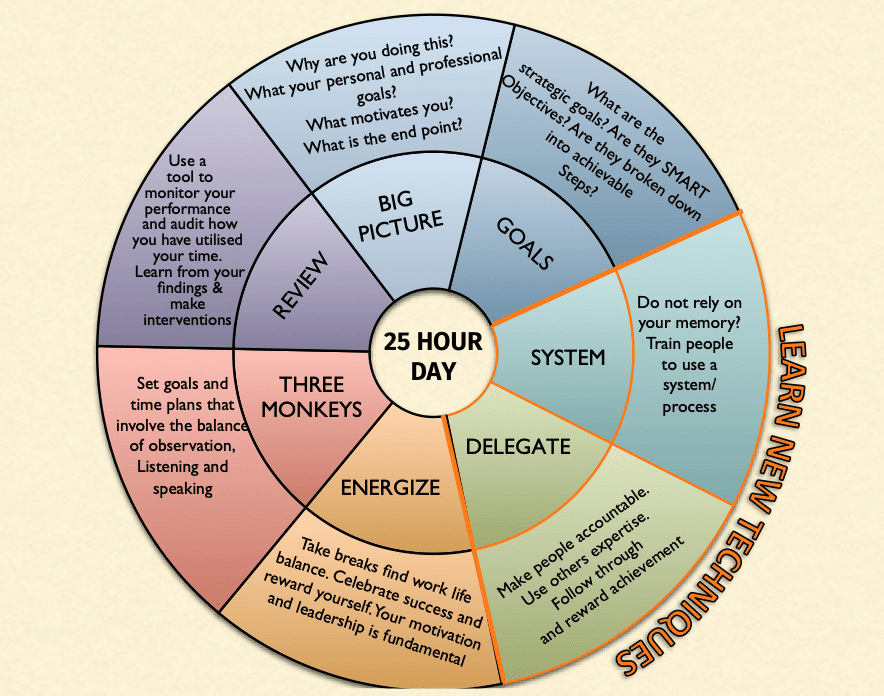
Here at Uspire Network those learnings prompted the development of the “25 Hour day” principal.

Big Picture

This needs to encompass your ‘balance of life wheel’ consider your financial goals for the next 5-10 years; think about your health and wellbeing objectives.  Then reflect on our ‘spirit’ encompassing your values and the things that give you emotional energy and build your self-esteem. What are your personal goals, the things that you want to do with the family or targets for yourself.  Finally, what are the business goals, those objectives that need to be achieved because they define the strategic position for the future?

Everything begins at this ‘Big Picture’, it sets the rhythm of your life, it defines your roles and goals and without this being well developed your day-to-day activity can have reduced overall purpose. However, when that purpose is aligned with your activity then you enjoy the greatest sense of passion, motivation and commitment, which can only come from the feeling of taking action and living what’s most important to you everyday.

Goals

Once you understand the ‘Big Picture’ then identify the key goals or statements of intent that enable you to visualise this objective and break them down into manageable tasks. Several techniques and processes exist within the Uspire Network productivity tools that can guide you to do this better and within your own personal productivity style.

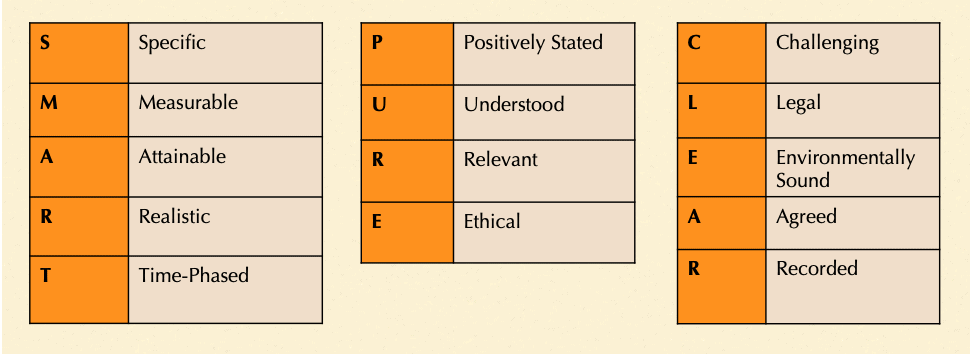
We have all heard about how goals should be SMART but at Uspire Network we now recommend and adopt the 3 dimensions SMART – PURE – CLEAR methodology

Systems

How you mange your time and allocate your goals is fundamental to personal productivity this is where time is lost or gained.  In the ‘Think Tank’ we will explore a range of other tools and techniques that can match your productivity style. Mixing up your time management techniques can often boost your effectiveness.

Delegation

It is very transparent and easy to measure that those leaders who can delegate to high calibre people and can be ‘nose in’ but ‘fingers out‘ achieve more than others.  However, effective delegation cascades from not only your ability to recruit and train the right people but also to create the 3 dimensional objectives and draft detailed and easy to understand project charters.  The quality of these charters can make the difference between an average result from your direct reports or an exceptional one.

Energise

The energy that drives your productivity is not endless so within our Uspire productivity toolkit we also talk about gaining a deeper understanding of your ‘BEAD’ which is your biological energy attention and drive this fluctuates during a day and week.  Having greater awareness of your personal ‘BEAD’ enables you to allocate task and activities more effectively.

Knowing when to take breaks, how to find your work life balance along with learning to celebrate success are all fundamental ways of energising your BEAD.

Three Monkeys

Great leadership involves equilibrium of both resources and method.  Optimising these efforts by splitting your time with your people around the three principles of observing, listening and speaking creates better leadership and embraces humility.

What is it like when your boss spends 90% of their time telling you what to do?  What is it like when your boss spends 90% of their time watching what you are doing?  What is it like when your boss spends 90% of their time listening to what you say providing very little advice or guidance?

Great leadership finds the balance for each individual but the principle of a third listening, a third speaking (giving feedback) and third observing (catching you doing things right or coaching when needed) never goes far wrong.  When looking at how you are using your time what is your ratio like?

Review

We never get better without learning and continuously applying the right mind-set.  You should adopt a personal productivity-auditing tool that enables you to benchmark your effectiveness against some key principles.  These findings will help you adapt and make interventions that ultimately enhance your performance.

When reflecting on the highly focussed and undistracted Warren Buffett, the disciplined and organised Beth Ford and the long list of successful entrepreneurs several characteristics spring to mind that again draw references from the Uspire Network 25 hour day:-

  1. They all understand the big picture and their own sense of purpose and definition of balance.
  2. The goals they set for themselves and the team are challenging because they know these require focus and are less distracting.
  3. Adopt a structured approach, they set a consistent and reliable pace to their activity, it’s not about being busy more about being effective.
  4. They only tackle things they understand and when that is not possible they learn quickly but also seek out expertise that can help.
  5. Always focused on the outcome, they understand that it is the result that counts. With a competitive nature completing bite size tasks feeds the sense of achievement and drives them forward at pace.
  6. Visualise success and anticipate the obstacles. Creative thinking and problem solving enables them to overcome problems quickly by mentally rehearsing the solutions this helps prevent the impact of an unexpected event.
  7. No matter how challenging or tedious they always ‘eat the frog’. Putting difficult or boring things off is not in the mind-set in fact they use their most productive BEAD to tackle these and get started.
  8. Whilst personal productivity is about the individual many challenges need a team or require delegating in a supportive style. They always recognise that a collaborative approach is often the most effective response.

To achieve the 25 hour day requires discipline and repetition this ultimately embeds the principles of excellent time management.

Great leaders know how to do the right things, to the highest standard on a daily basis and know using a structured approach gives them no limit to their personal success.

They constantly ask the question what’s the most important action to take right now with the resources I have accessible that can enable us to deliver the objective.  It is also the realisation that to do less is acceptable especially if you are doing more of the stuff that really matters to your big picture.

Being constantly busy is not a ‘badge of honour’ it can be a signal of poor planning or resource management.  When you adopt the ’25 hour day’ methodology you focus on what’s important and you are not busy but in control.

Colin Wright is the Chair of the Uspire Network. To find out more how The Network can help you become the best leader you can be contact Colin for a confidential chat.

photo credit: https://www.freepik.com/photos/restaurant“