SWOT your competition from the STEEPLE and grow with SUCCESS

In this blog we will continue to explore the ‘U’ for understand in the SUCCESS model.

As we conclude this section and consider all of the different components that will assist your strategic understanding of the market you serve and the capabilities of your business, two final well used tools that we promote in the Uspire Network strategic planning process are STEEPLE and the classic SWOT analysis which we refer to as the SWOT PLUS.

Gaining these additional and important insights before reviewing your strategic position ensures that your most valuable assets of cash and people are utilised in the most effective way. To optimise this return on investment you need to fully understand your customers changing requirements and the likely impact of external factors (like Covid 19 for example) on your business.  Remember that virtually no product or service in todays rapidly changing markets is so unique that it cannot be quickly replicated or bettered on both price, quality and service.  If however, you hold a focus group or ask your customers why they buy your product or service they will tell you that it’s because of price or a perceived benefit including product, quality and service? We expend significant energy and resources searching for this unique proposition that delivers a differentiated business.  Simon Sinek referred to this realisation by stating that businesses exist on two distinct levels, manipulation and inspiration.

At Uspire Network we would add a third dimension which is anticipation we call this your AIM.  How you target customer growth and your competition.

A nticipation

I nspiration

M anipulation

If we argue like Simon Sinek that most companies struggle to fully grasp why their customers are their customers or even why people are working for your organisation.  Then the reality is that most businesses are making decisions or targeting a strategic position based on a set of incomplete or, more tragically, completely flawed assumptions about their core ideology and economic denominator.  He argues that there are only two ways to influence human behaviour, you can manipulate it or you can inspire it, but at Uspire Network we believe that you can also anticipate it by understanding the broad range of factors that could influence it.

This particular blog is to remind you that some of the traditional but modernised models should be used or at least refreshed every year so that your strategic position anticipates change and you can improve the ‘U’ for understanding.

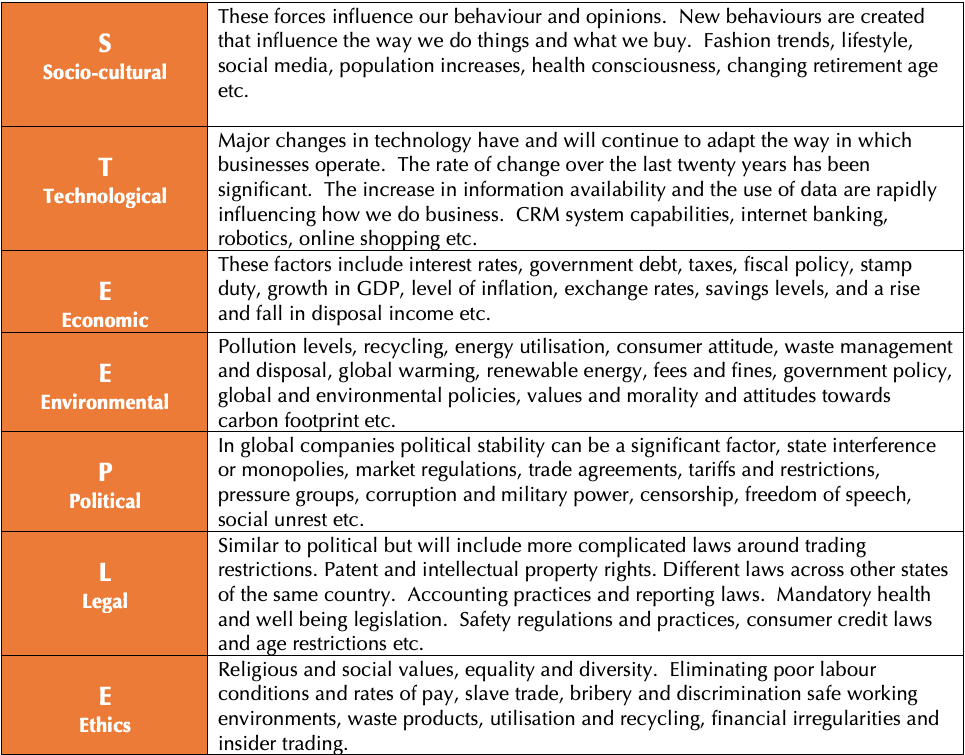
The STEEPLE is an excellent tool to help you fully comprehend the external factors that will impact the performance of your company.  When significant changes occur it can be a useful process to assist you in anticipating new influences on your customer behaviour.

The best way to use it is as part of a strategic planning process with your senior team and brainstorm and gather key information that will help you populate the relevant sections.

Use the document based on the ‘4 seasons of Covid recovery’ but I would also recommend that you ask the team what is likely to change in the next 10 years in each of the sections.  This prevents a narrow and closed ‘mind-set’ thinking that far out-stretches people’s imagination to the future possibilities.

Then challenge your existing direction based on these findings assess the relevance and role of your strategic anchor and create a detailed action plan.
Once you have completed your STEEPLE then you should consider both your internal and external SWOT analysis.  Frustratingly we have been involved with many companies who always respond with ‘yes we use a SWOT’ but when you examine the output it usually resembles a quick brainstorm amongst the management team and a complete lack of rigorous questioning and evaluation of your macro and micro competitive environment.  In building your forward plan it can be one of your most powerful tools and should be responsible for generating a large number of your strategic imperatives.

Once you are clear about your core ideology and your strategic anchor the SWOT process if used alongside the learnings from the STEEPLE and your Sun Tzu competitive positioning exercise becomes a decisive way of evolving and understanding your full business proposition including your critical defensive and offensive positions.

Strengths             Need no explanation they are what you do well and often better than the competition they should be supported and evidenced by customer and employee feedback and testimonials.

Weaknesses         These require patching in the short term but also fixing in a robust and sustainable way for the future.  To do this properly your executive team must face the brutal facts and deal with any ‘elephants in the room’. It needs absolute honesty and realism to get any genuine strategic benefit from the exercise.

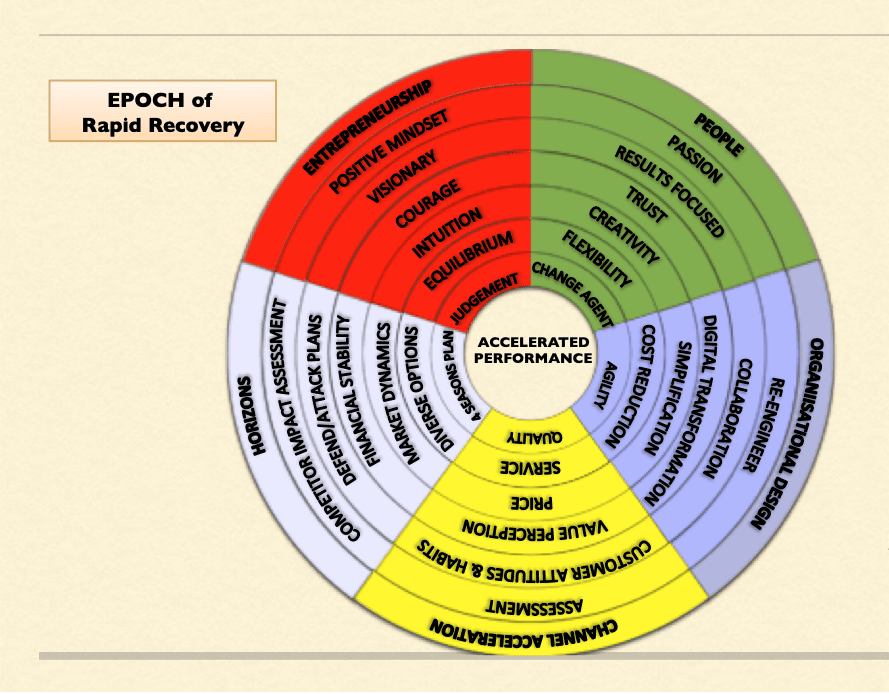
Opportunities      It’s important in any process to find some ‘quick wins’ but the best strategic advantages will come from the information in your STEEPLE.  What can you anticipate, inspire and manipulate in your macro and micro environment? How can you use a process like EPOCH which we discussed in a previous blog to move with great agility?
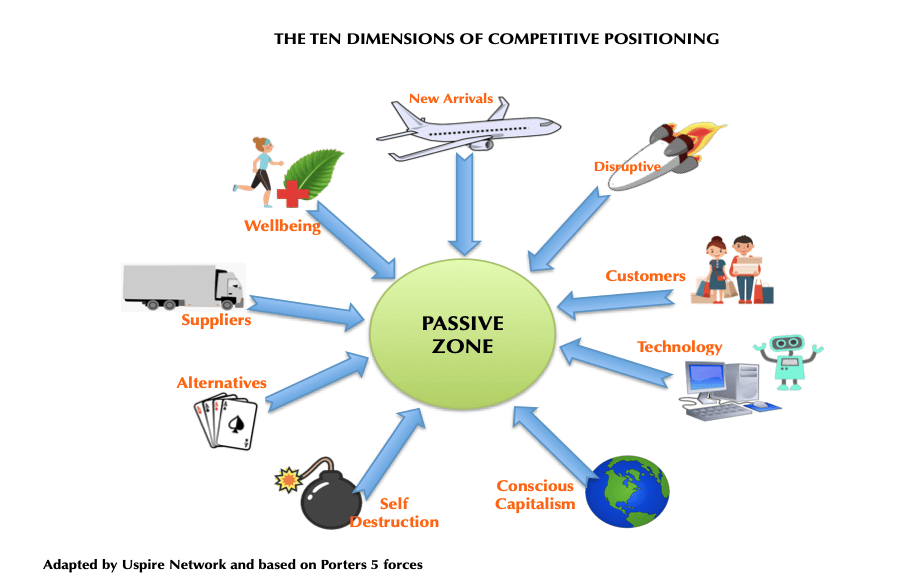
Threats                 This requires a detailed defensive plan and most of these risks will be determined by using the ‘10 dimensions of competitive positioning’ this exercise helps your executive team to anticipate where the enemies are coming from.
As mentioned earlier the SWOT is only effective if the questioning and facilitation of the process encourages ‘deep dive’ thinking and thorough analysis.

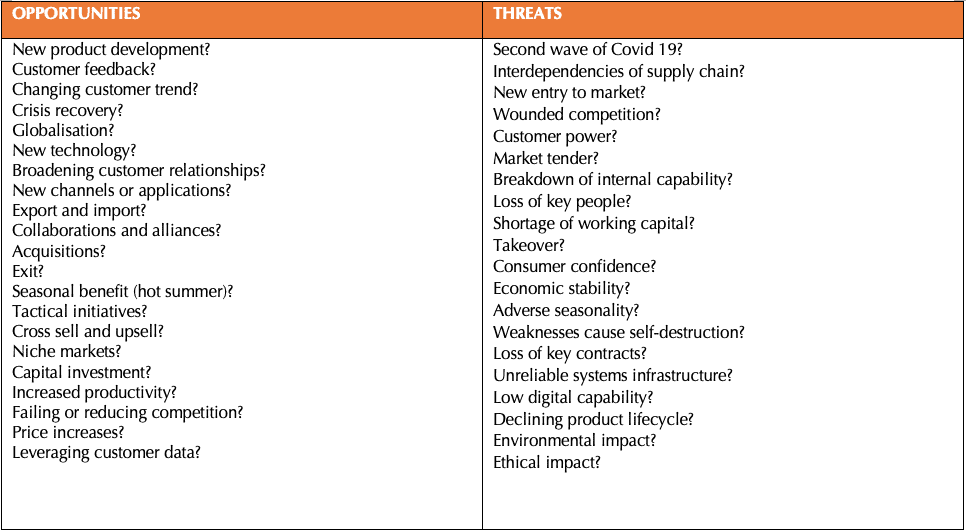
Here are the questions that underpin the Uspire SWOT PLUS methodology:-

Use these and the information from your STEEPLE and 10 Dimensions of competitive positioning to ensure that the quality of your SWOT guides your strategic objectives.

Answer questions whilst also considering your benchmark competitors.
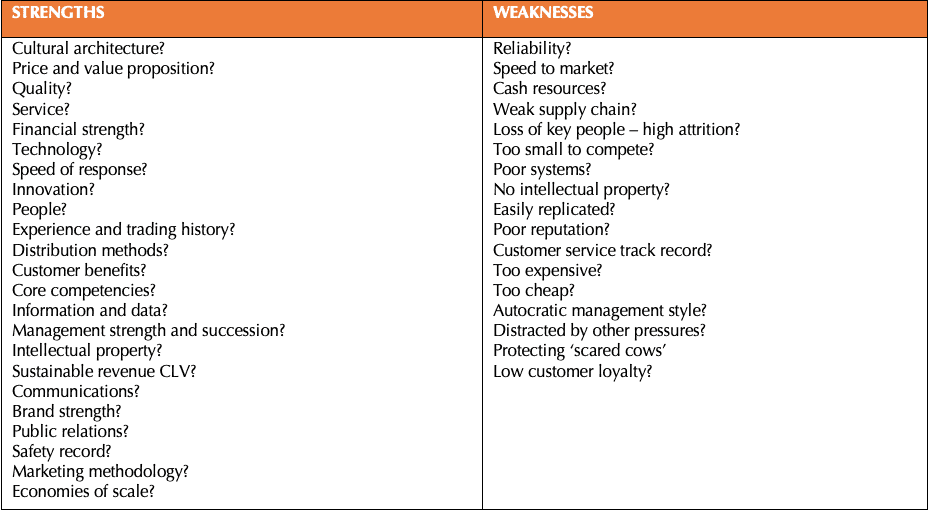
These generic questions for each quadrant are to stimulate your thinking especially when used with the other tools but it is also important to build your own questions for each section based on your specific industry and market.

Once you have completed your analysis look at developing an action plan around the following SWOT PLUS matrix.

Make sure that when you develop your SWOT PLUS you also look for stretching and ambitious future objectives.  Try to avoid the tendency to make the exercise fit your current state and existing strategic position.  The finest commercial leaders do not allow a strategic planning process just to be a ticking box exercise.  It is about identifying objectives and goals to grow and improve.
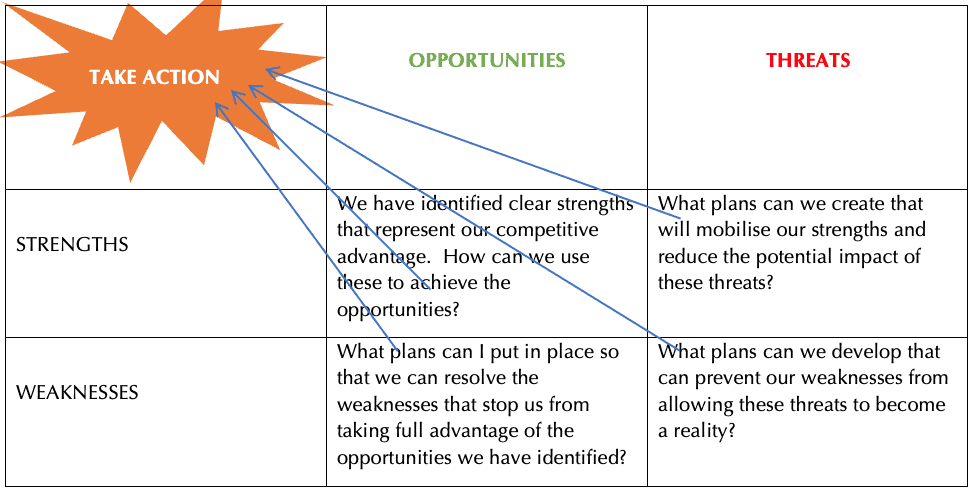
Now ask yourself three key questions from the SWOT PLUS exercise.

  1. What are my key insights from the process?
  2. What interdependencies exist that we have not considered that could hinder progress?
  3. So what are the critical actions for the next 100 days?
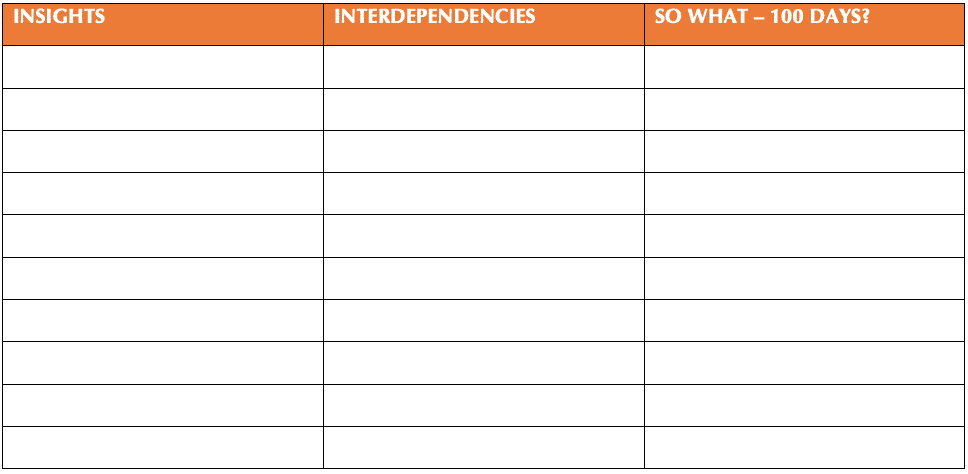
Once you have identified your key actions use the following template to provide additional structure to your strategic plan and this will aid the communication process.  It also forms part of your measurement tools which will be included in a future blog and ‘Think Tank’ where we will explore the ‘S’ for STEER in the SUCCESS model.

When using the template give each goal a title and these headline descriptions should represent plans and objectives for the next 3 years.  So think about them in the context of short, medium and long-term strategic imperatives.
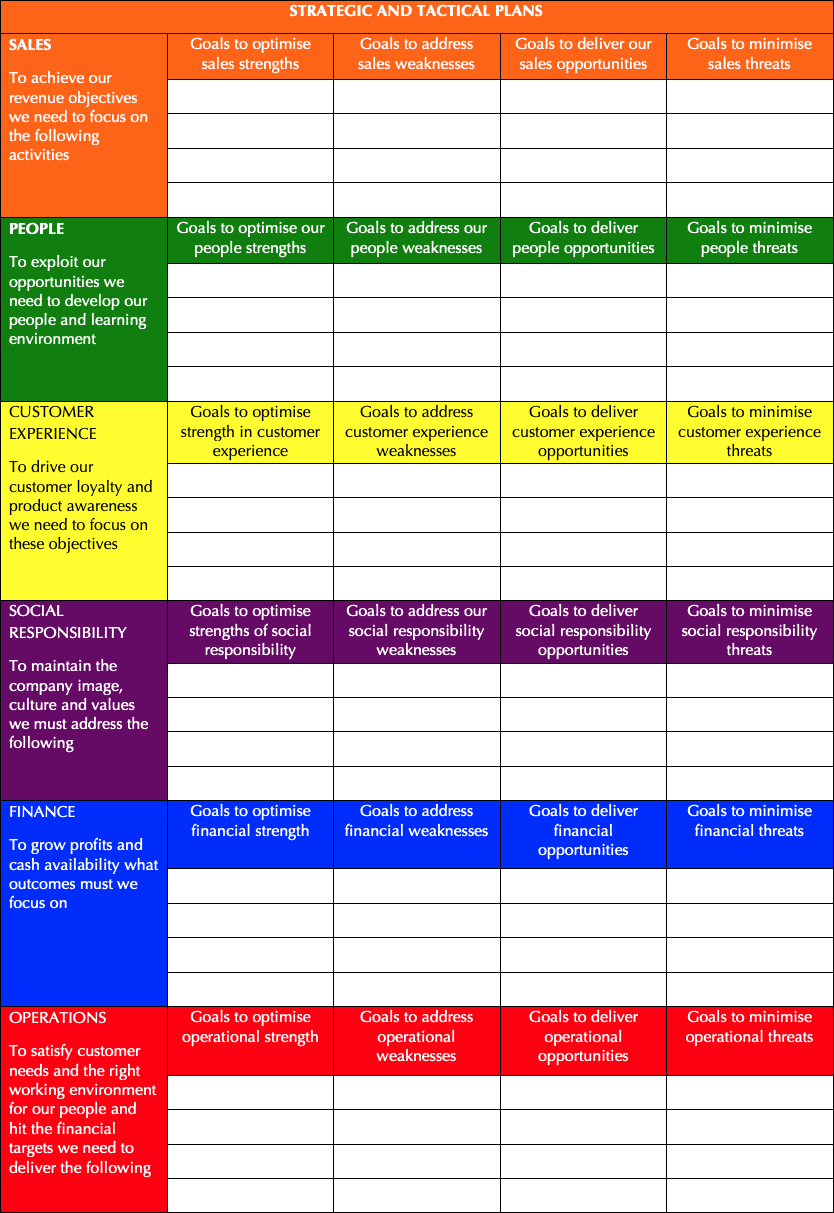
Finally, we began with a few quotes from Simon Sinek so lets end on something from him that creates further context.

Creating your strategic plan and vision for the future with values people live and believe in and a sense of direction establishes the WHY for any business.

We call it the SUCCESS model for a reason because in his words there is an irony to success.  Many people who achieve great success don’t always feel it.  Some who achieve it talk about a loneliness that often goes with it.  This is because success and achievement are not the same thing, yet all too often we mistake one for the other.  Achievement is something you reach or attain like the goals and objectives. It is something tangible, clearly defined and measurable.  Success, in contrast is a feeling, a state of being – you feel successful.  While we can easily lay down a path to reach a goal, laying down a path to reach that intangible feeling of success is more elusive.  Achievement comes where you pursue and attain the WHAT you want.  SUCCESS comes when you are clear in the pursuit of WHY you want it.  The former is motivated by tangible factors while the latter is more emotional, from a different part of the brain and we often lack the capacity to put those feelings into words.  The finest commercial leaders have the ability to never lose sight of the WHY.  They also ENERGISE us when they enable us to achieve our goals and PROVOKE us to stay focussed on the right direction and by doing this they truly INSPIRE us.
Anchoring Your Core Ideology and Learning From The Unexpected

As we continue with our theme of the SUCCESSTM model and the need to think more strategically about your business and the market it serves, the critical concept of your core ideology should be revisited to confirm its relevance for the future.  Will this vision of your business still serve you well during Season 2-4 and deliver the required shareholder returns?

Core ideology is defined as a combination of core purpose and core values, the essential and enduring principles that create identity and guide the organisation.

Exploring the “U” in the SUCCESSTM model takes us through the journey of revisiting this very important principle and here at Uspire Network we use references from the great Jim Collins book and in particular the “Hedgehog Concept” along with understanding your “strategic foundation or anchor”.  We believe that as a process it is critically important and much more involved than the pure textbook definition.

Failure in business today will more than likely be caused by a failure to change.  Commercial leaders who create the right vision and core ideology are giving the business a licence to dare and to get better than they were.  It provides the beacon and control system to prosper in a “new normal” and prevents directionless anarchy and confusion.  However, whilst every strategic planning process requires structure it must not become a 300-page document that stifles creativity and autonomy.

I think it was Steve Jobs who stated, “Would you rather be a captain of a cruise liner or a pirate ship?”  Although one of the best articles I ever read which accurately and creatively describes the principle of a well-developed core ideology driven by the spirit of leadership was written by John Clarkeson.  A similar comparison to Steve Jobs when he asked, if you would rather lead a symphony orchestra or a jazz band?  In the world of classical music the symphony would be regarded as a complex creation requiring the integration of a large assembly of highly talented individuals into a performance.  So what in this analogy represents the music? Well the leader must provide the vision, mission and values and ensure the music is played out consistently in the symphony.  In this example the score is clearly defined for each player – when to pause, when to play, how loud and what notes.

However, when you look at the history of Duke Ellington, he was not that type of leader, not a theorist and in fact people often doubted how well he could read music.  If you chose to measure him by the output of his original compositions he was one of the most dominant figures in 20th century music.  This prodigious creativity could be explained by people that worked with him and learned how to forge the divergent personalities of his jazz group into a single, highly creative instrument.  Members of his band described how he learned to create on the run; he would offer up the core idea and the principles of what he wanted from the team then rely on his players to take cues from each other and fill in their parts as they thought best.  His players were good but not without equal.  He knew their strengths and weaknesses but importantly they were passionate about his core ideology and the jazz market they served.  He just wanted them to learn the things that they did not think they could do.  Some players came and went and the best ones stayed for years, they developed by learning from each other and following the vision of the leader.  When performing Duke Ellington was on the piano and in the middle of the process providing the cues, the results were astonishing and their capacity for innovation grew as they built on their cumulative experience.

Great leaders understand the importance of these guiding principles; if you get these right then everything else flows.

So lets refresh ourselves with the Jim Collins “Hedgehog Concept” and how we recommend that your strategic anchor is fundamental to setting the “musical rhythm” of your core ideology.

The original idea came from an ancient Greek proverb “The Hedgehog and the Fox” which pitted the two natural enemies against each other.  Foxes pursue many ends at the same time and see the world in all its complexity; they are scattered or diffused moving on many levels and complex paths.  Never integrating their thinking into one overall concept or unifying vision.  Hedgehogs in comparison simplify a complex world into a single core idea and a set of principles that guide everything.  Regardless of all the world’s complexities the hedgehog reduces new challenges and dilemmas into simple ideas and a clear path, anything that does not hold to the hedgehog ideology holds no relevance.  When foxes and hedgehogs are pitted together the hedgehog always wins.

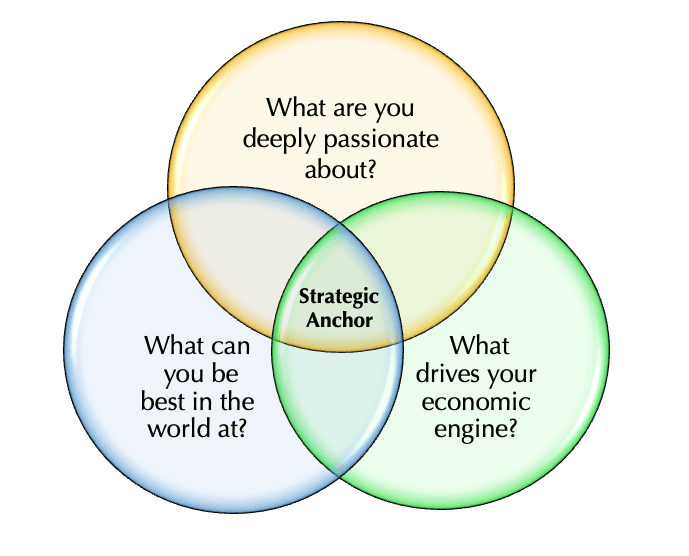
Jim Collins argued that great companies could answer three key questions that created a crystalline concept that flowed from a deep understanding about the intersection of the three key dimensions.  Here at Uspire Network we advocate that the ‘magic story’ comes from this important exercise but at the centre of the circles is your strategic anchor a definition of how you serve your market and what drives its performance.

Your strategic anchor like the other components of this core ideology act as a compass and decision making tool for the company.  These are used in conjunction with the core values and the most critical of these often represents a company’s true passion.

When core ideology between individuals, customers and the company are out of alignment then self-destruction can occur.  You will observe poor customer service, lack of productivity, low employee engagement and falling revenues.  This fundamental process is the starting point of your strategy and everything cascades from it.

Circles of the hedgehog concept adapted to integrate the strategic anchor at its centre

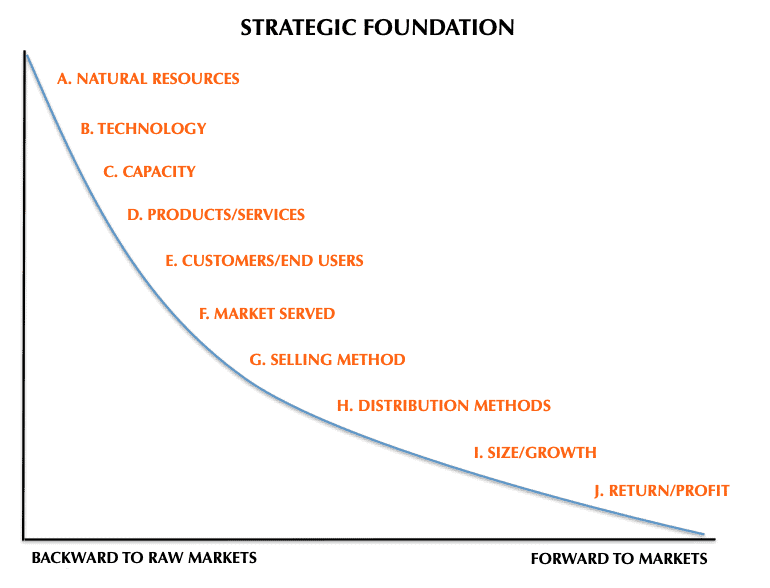
Lets gain a deeper understanding by reviewing the chart below.  We have identified ten strategic anchors, which represent the foundation of a majority of companies.

The graph begins with ‘Natural Resources’ (like BP or Shell for example) and moves to a more market focussed position across the bottom.

A. NATURAL RESOURCES

  • Coal, oil, metals, water, etc.
  • You sell them, others process
  • Your competitive advantage lies in quality, quantity, location or form
  • You excel at exploration and conversion

B. TECHNOLOGY

  • You invent or acquire hard technology or soft technology
  • Your competitive advantage lies in the unique quality of this technology and your ability to develop a wide range of applications from it
  • You excel at research and application marketing

C. CAPACITY

  • You have large capital invested in plant and equipment
  • Full use of this capital is essential and you are price sensitive
  • You have the knowledge to make specific products or service
  • Your competitive advantage lies in optimising your capacity, turnaround times and price
  • You excel at plant efficiency and substitute marketing

D. PRODUCT OR SERVICE

  • You meet very specific needs of users around common characteristics of appearance and function
  • You grow by finding a broader range of future users
  • Your competitive position lies in your ability to differentiate your product and service. The best product and service wins the game.
  • You excel at P&S development, process development and after sales service.

E. CUSTOMER/USER NEEDS

  • You are organised around a specific describable customer or end user e.g. age, sex, occupation
  • You have a wide variety of unrelated products
  • You are always trying to identify their new needs to be first to market
  • Your competitive position lies in your strong relationship with these users
  • You excel in market/user research and at maintaining user loyalty

F. MARKET NEEDS

  • This is a variation of user needs
  • You are attached to a describable industry market e.g. hospitals or large dominant manufacturers
  • Market is not limited to consumers it includes all sectors e.g. B2B

G. SELLING METHOD

  • You have a unique way of selling
  • All of your products must be sold using this method
  • Your customers will only be reached using this method
  • You will offer products from other companies using this way of selling
  • Your competitive edge is your management of this selling method
  • You excel at recruitment, retention and training your sales team

H. DISTRIBUTION METHOD

  • You have a unique method of distribution – Only offer products delivered this way including those of other companies
  • You expand by identifying other distribution channels
  • Your competitive edge is this distribution method
  • You excel at distribution organisation

I. SIZE/GROWTH

  • You are anchored in volume and critical mass
  • Your desire to get larger or smaller leads to a change in your business
  • You sacrifice earnings to achieve physical growth in size or geography
  • Your competitive edge is in your size
  • You excel at maximising volume and asset management

J. RETURN/PROFIT

  • You are anchored in the business profit
  • You are focussed on profit ratios above all else
  • You will choose any product or service based on its profitability
  • You are not concerned by product or market synergy
  • If a company is not making the required returns you sell it and buy another
  • Your competitive edge is financial controls
  • You excel at Portfolio management and MIS

On the upcoming Think Tank we will discuss examples of powerful strategic anchors and how to create and check the relevance of your business “core ideology” to this critical foundation stone.

The other fundamental questions that should be answered according to Jim Collins are as follows:-

What are you the best in the world at?

This goes far beyond your core competencies, just because you have decided what they are doesn’t mean you can aspire to be the best in the world.  Conversely what you can be best in the world at might not even be something that you are currently doing.  This whole question is not just a goal or strategy to be the best at something, it is an understanding of what you can be best at and equally important what you cannot be the best at?

What drives your economic engine?

To gain the essential insight into drivers of your economic engine search for the one denominator (profit per X) or (cash flow per y, for example), that has the single greatest impact.  If you were stranded on a desert island and you could ask one question about the performance of your business, (financial perspective).  One key ratio to systematically increase over time to make a greater impact what would it be?  This measure can be subtle and sometimes unobvious.  The key is to use the denominator to gain understanding and insight into your economic model.

What are you deeply passionate about?

Great companies do not pick a course of action, then encourage their people to become passionate about their direction.  Rather those companies decided to do only those things they could get passionate about.  In Duke Ellington’s example – Jazz music!  They recognise that passion cannot be manufactured nor can it be an end result of a motivation effort.  You can only discover what ignites your passion and the passion of those around you.

Now, lets consider in leadership language how you can strengthen the ideology of your business, it is the first imperative of a strategic process.  Included within its rich tapestry are the following key business drivers:-

  • Its part of articulating the companies values and passion
  • It unites employees around a common cause
  • It fundamentally supports your brand image (use with a brand key process).
  • It translates the external brand into internal brand language
  • It provides your strategic identity against the competition
  • It communicates the long-range intentions of the company
  • It enables greater innovation and creativity within the chosen pathway
  • It helps you to build “stories” that explain the business you are in and its cultural architecture, behaviour and standards.
  • It helps you to hire based on competencies and organisational fit

In the next “Think Tank” we will use some Uspire Network designed questionnaires to measure the effectiveness and acceptance of your company’s core ideology.

Finally, during this unprecedented crisis it is also interesting to listen to experienced CEO’s who have discovered new things about their business and the market they serve.

When developing your strategic plan take time out to reflect on the following?

  • Name up to three unexpected successes in your industry or in your company?
  • Now name up to three unexpected failures in your market or company?

What can you learn from these, what benefits did they bring or where did they go wrong.  Answering these types of questions helps you to look at your business through a different lens.

Colin Wright is the Chair of the Midlands POD of the Uspire Network. To find out more how The Network can help you become the best leader you can be contact Colin for a confidential chat.

Sun Tzu and the 10 Dimensions of Competitive Positioning

My last blog covered the “Grow with Success” model and the importance of revisiting your strategic planning process.  The Uspire Network approach is to first fully UNDERSTAND (U) your business environment and then CREATE (C) the strategic imperatives.  This blog, as part of the process, helps you to fully consider your competitive position and how to create targeted initiatives.

“The Art of War” by Sun Tzu was one of Sir Terry Leahy’s favourite books and when you look back at the success of Tesco during Lord MacLaurin’s period, then the handover to Terry Leahy, you have to admire the devastating impact they made on the retail competition.  He often stated that it is the competitors that create internal paranoia and they were the only reason for losing any sleep at night.  He quoted that nobody likes the idea of a competitor getting up every morning intending to steal your customers.  However, they are actually good for you.  They get the best out of you.  The real skill is to learn from them faster than they can learn from you.

Here at Uspire we believe like Terry Leahy that your competitors are a source of education and inspiration that come free of charge.  They are often also a ‘soft target’ if you are better equipped to react to disruptive market factors.

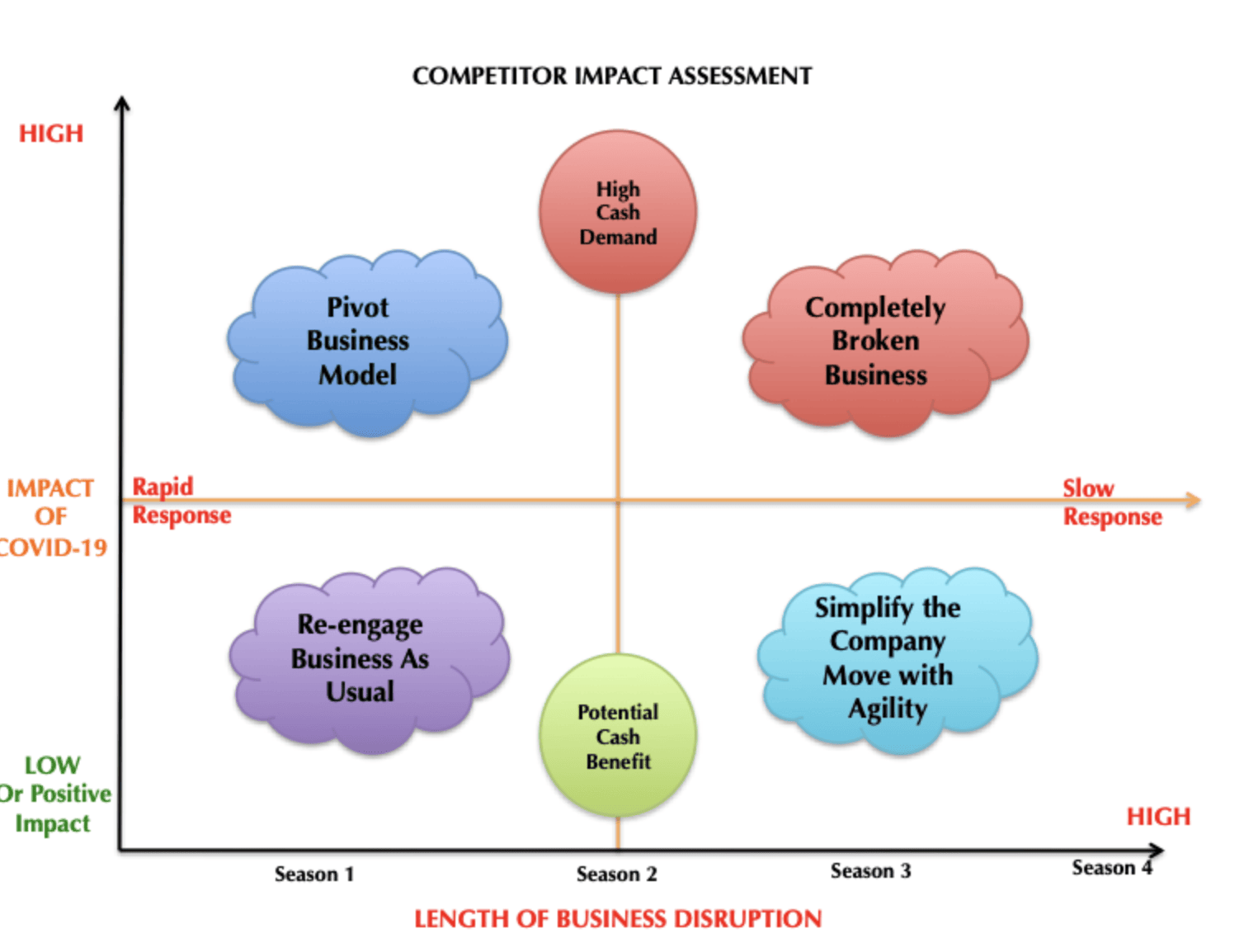
In this previous blog about the four seasons of Covid recovery we discussed the importance of preparing a Competitor Impact Assessment using the guidelines below.  Plot on the schedule below where you believe your competition are positioned and your own business.  At the same time consider whether the economy or your business will have a ‘V’ shape, ‘W’ shape or ‘U’ shape recovery.

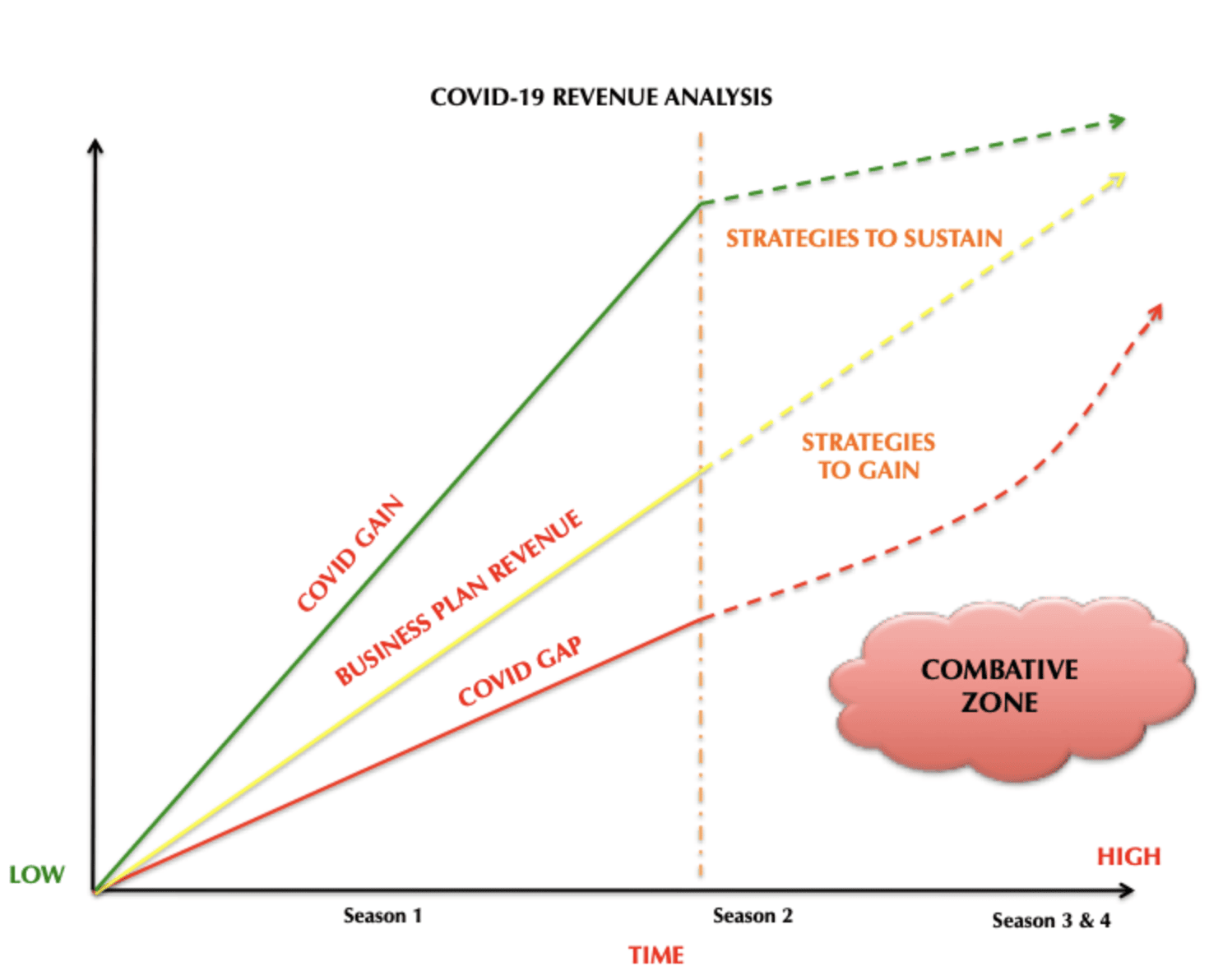
The Covid-19 crisis has resulted in a winners and losers battlefield and the challenges companies are facing can be debated in the graph.

Those companies that have achieved a Covid gain are exploring tactics and strategies to hold onto these increases and should be deploying their actions with the essential organisational agility to establish a sustainable benefit.  If your business is facing a Covid performance gap then the challenge of recovery will largely depend again on speed of reaction but also on the financial reserves on your balance sheet.

However, all of these initiatives, gain or gap, will be influenced by “The Art of War”, your ability to optimise your resources and competitive positioning.

Sun Tzu lived in North Eastern China 2,500 years ago about the same time as the great philosopher Confucius.  He was considered the finest military expert and his strategies had delivered countless victories on the battlefield.  Sun Tzu modelled his armies on what could be called a ‘natural organisation’ model.  They exist around a principle of three characteristics:-

  1. They exist to serve a defined purpose and the term of their existence corresponds to the time required to accomplish their purpose
  2. They are information centred and seek to use data as a basis for action. Avoiding unwanted opinion and conjecture and using uncertainty by estimating reasonable probabilities.
  3. They are completely adaptable and flexible in their approach with the ability to respond quickly and effectively to any changes in their environment that could have an impact on the army’s ability to achieve its defined purpose.

Perhaps Tesco would have translated the following Wisdom of Sun Tzu as part of their strategic plan when looking at the strengths and weaknesses of the competition.  When you have completed your Covid-19 Competitive Impact Assessments they might also provide some context to your thinking.

“Cross the Mountains by following the valleys.  Stay on high ground where you have clear view of the surrounding landscape.  Do not face up hill in a fight.  When the enemy is crossing water it is advantageous to attack when half of the troops have crossed over.  When crossing a swamp move quickly.  Keep away from gorges, hollows and crevices that form natural traps and snares.  If the enemy troops must lean on their weapons to stand upright then they are hungry.  If the enemy’s water carriers drink first the entire enemy troop is thirsty.  If the enemy troops clamour during the night the enemy is fearful. When the enemy feeds its war horses grain and kills its pack horses for meat they are starving.  When the soldiers do not hang up their cooking pots or return to their shelters then the enemy is desperate and at their most vulnerable.”

Translate these thoughts into the symbols of your market positioning versus the competition.

In the last blog which covered “Grow with Success” we expanded on competitive theory and the simplified principle of passive and disruptive competitive forces.  Many of you will have used “Porter’s 5 forces” to establish an opinion on the market attractiveness but in today’s world the concept is slightly dated and also relies on high quality facilitation to draw out all of the market influences that can have an impact on your investment or business start up decisions.

At Uspire Network we have adapted this thinking to explore the more disruptive influences of a fast-paced commercial world and the unprecedented conditions caused by the pandemic.

Here are the 10 dimensions of competitive positioning:-

PASSIVE
Evolutionary day-to-day movement in your market dynamics. Predictable and easy to anticipate and you are often well prepared.  Combated by tactics and collaboration.  This unfortunately is often the only competitive thought process in the company.

DISRUPTIVE
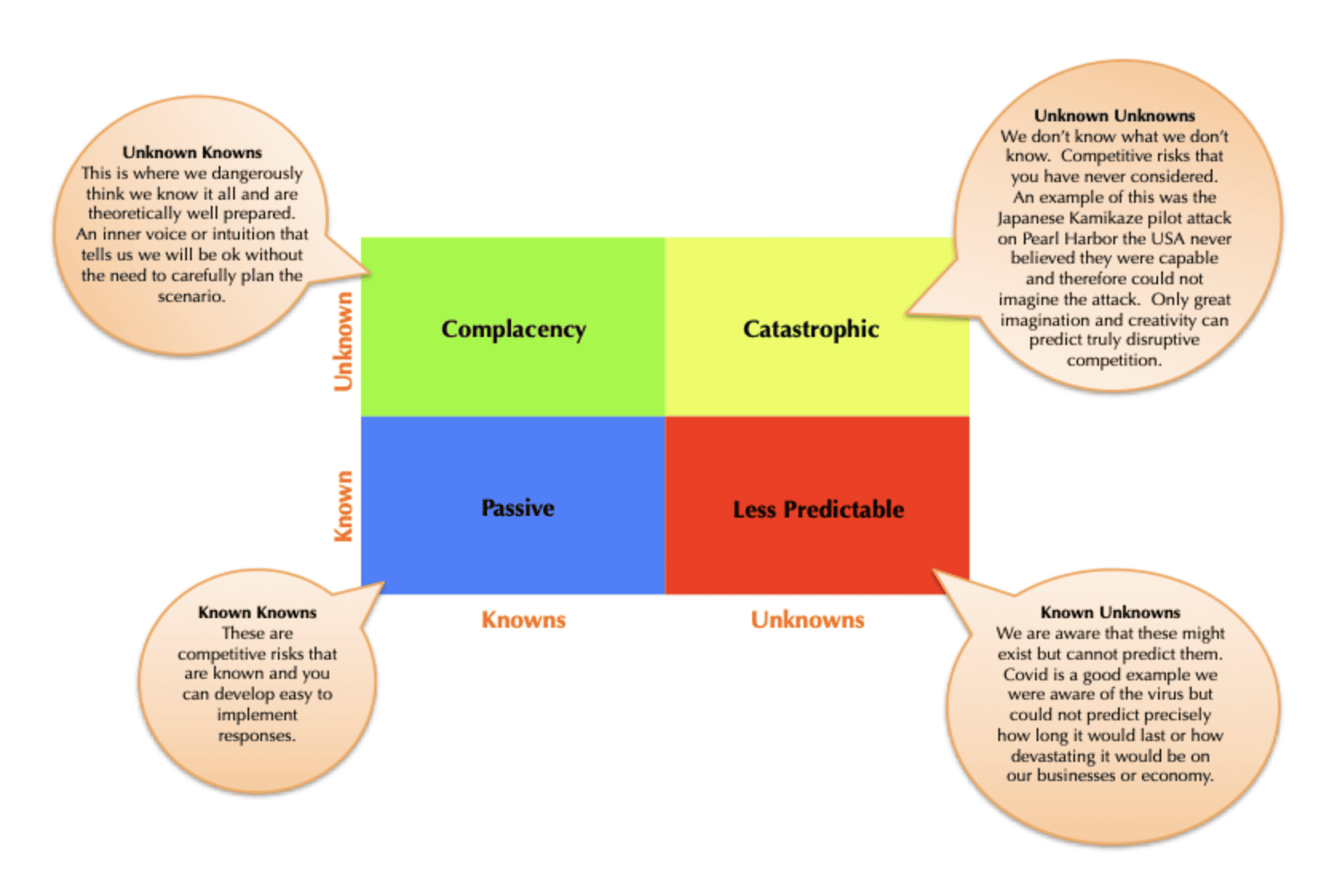
Deliberate often unforeseen caused by a revolutionary event or crisis.  The best way of understanding this is to use what’s called the Rumsfeld Matrix.

NEW ENTRY
This is the threat of a competitor entering your category or market.  How easy can they arrive, who are they likely to be? Why will they find it attractive.  What factors can protect your position in the market.

CUSTOMER POWER
How easily can customers drive down price and damage your competitive position?  Can they dictate terms and leverage you against the competition.  How can you overcome this situation and differentiate yourself so that price is not the only point of negotiation.

TECHNOLOGY
Consider the impact of artificial intelligence and digital transformation, will new entrants or existing competitors out manoeuvre you?  Remember the impact of businesses like Bookings.com on the hotel direct customer trade?

CONSCIOUSNESS
Consumer habits and expectation are changing?  How are you adapting the business to this more socially responsible and environmental approach to the future?  Will you be out thought by the competition?

SELF DESTRUCTION
This can be complacency or financial capability like a “Zombie” company that is restricted by its cash supply or its ability to raise cash. It can be failure to embrace change Iike a “floppy disk” factory.  A lack of imagination leading to inevitable distinction.  This requires the leader to face the “brutal facts” and deal with the “elephants in the room”.  What can you do to prevent this internal and external threat?

ALTERNATIVES
Like a business that only sells apples is impacted when another company promotes pears.  How can you promote and secure your business concept in a way that increases utilisation.  What can you do to make your produce and feature more desirable to out manoeuvre the substitutions?

SUPPLIER STRENGTH
Can a competitor acquire your supply chain and then attack your business?  Can your suppliers just increase prices because you have no alternative? How can you protect the company from risks in the supply chain?

WELLBEING
Attitudes to health and personal safety are changing. Are your business and products equipped to deal with this?  Will competitors emerge that offer a healthier and safer way of servicing your customers needs?

Reflect on these ten dimensions and consider them both from your strategic position and the competition.

I cannot emphasise enough that in the current climate where the competitive dynamics have been disrupted how important it is to think about your plans to combat the challenges ahead.

At Uspire Network we would suggest you consider the scale of your business and its relative business plan objectives.

Sun Tzu would recommend that if the army is larger than you then avoid conflict but consider guerrilla warfare to protect your position.

If you are the same size then wait for weaknesses and opportunities that make your attacks more impactful.  When the enemy army is small but is gathering support then stalk them until you can attack decisively seizing a permanent and controlling advantage.

Use the 10 dimensions and write down your observations as a team and relate to your scale in the market place.  Whatever your competitive position it is the leaders role to find a place in this eco-system where the company can defend itself against these impacts or take advantage of weaker players.

Whilst working with the telecommunications sector I had the experience of how transformational large corporates can use competitive analysis to grow profitability and shareholder value in the long term.  This business followed a strategic process that extracted every piece of knowledge possible about its competitors then every year they reviewed and anticipated what they would do next.  The board of directors, led by the strategists would assimilate the wide-ranging competitive data and then adopt the role of running the board of each competitor analysing the information and assessing all the options as if they were running British Telecom.  For example they were able to predict every likely scenario for each competitor whilst reviewing the dynamics of the market and changing consumer trends. This led to them defending the UK market on a ‘yes but’ strategy which was “not at all costs” because it was highly margin corrosive, deciding to instead divert investment into global high growth opportunities which delivered greater shareholder value in the long term.  The detail they had about each competitor was extraordinary and we will discuss this on our next ‘Think Tank’.

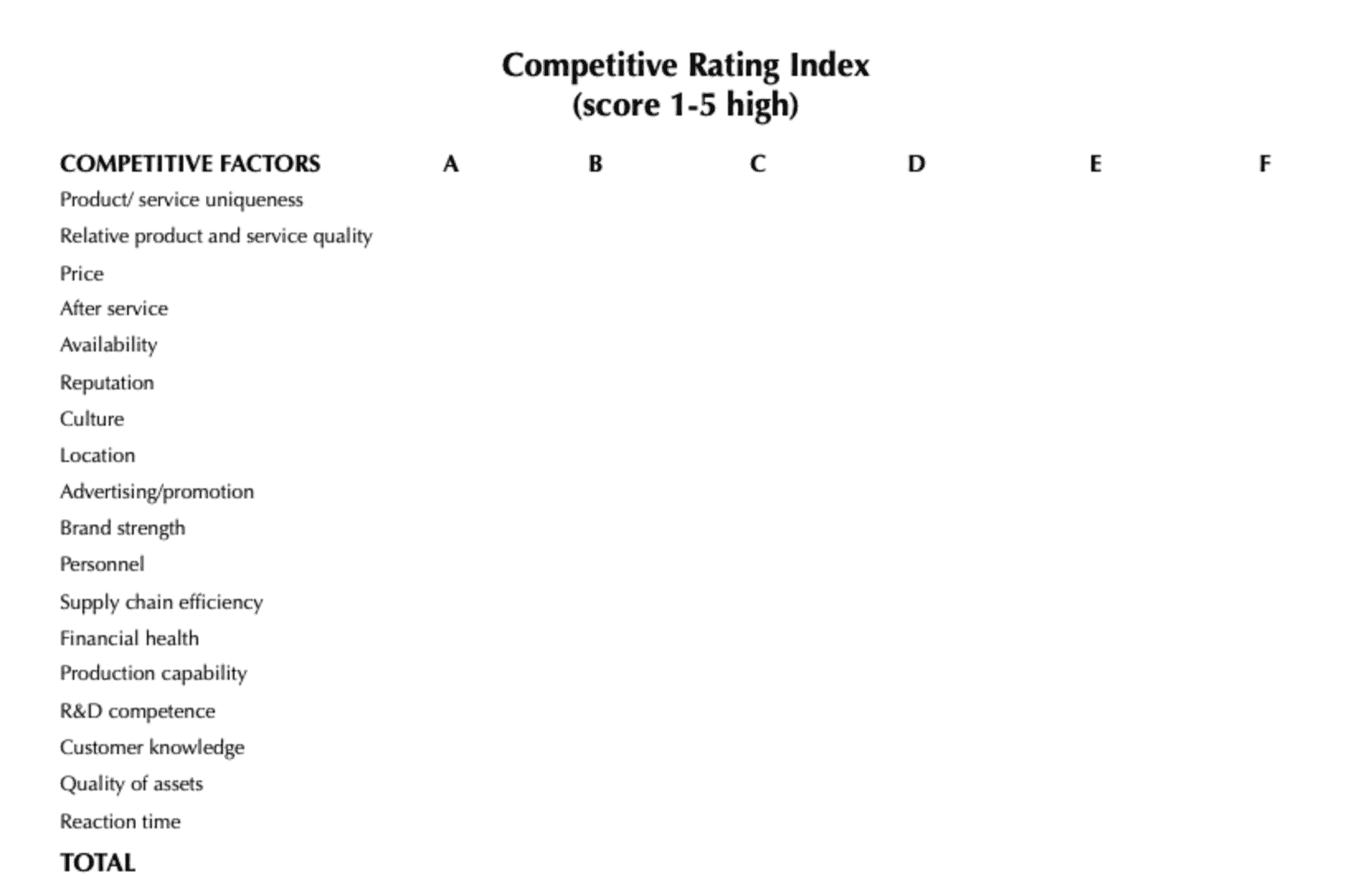
The template below can be developed to suit your market and business concept by changing some of the features and statements on the left hand side.  It forces you to review each of your competitors and their relative strength using key metrics and when you combine this with the Covid competitor impact assessment it should generate some interesting scenarios.

Finally, lets just place some of the Sun Tzu wisdom into context.

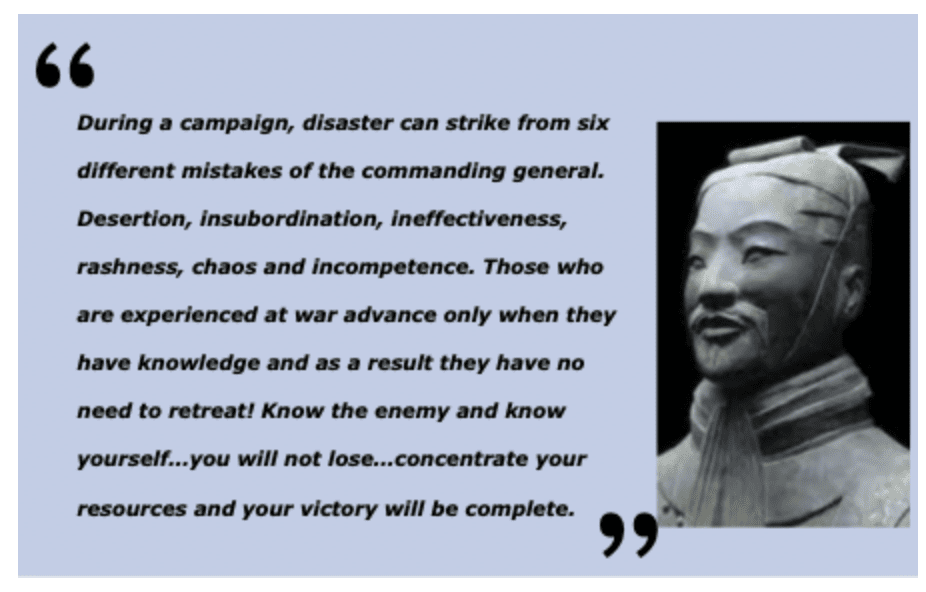
Sun Tzu states, “If you know your enemy and you know yourself you need not fear the results of a hundred battles”.  So study and fully assess your market position and reflect on the 10 dimensions.  Find out how your competition has coped.  Look for what they are now not doing well and focus on filling the gap this creates.

Sun Tzu states, “The general who wins a battle makes many calculations in his temple before the battle is fought”.  Make a detailed plan don’t just wait for things to happen.  Set goals and targets that are both offensive and defensive.

Sun Tzu states, “Supreme excellence consists of breaking the enemy with no fighting”.  This can be achieved by customer migration to your business based on great quality and service during the pandemic because you have exceeded your customer expectations.  It might represent competitors going into administration because of starvation (lack of cash) during the crisis.

Sun Tzu states, “If you are distant from the enemy make them think you are near”.  Promote and advertise your capability and punch above your weight with impactful and professional marketing.

Sun Tzu states, “ regard your army as your children and they will follow you info the deepest valleys treat them with respect and they will stand by you even into death”.  Remember to be a “world class” recogniser, support your people and recruit individuals that have the right values and a passion for the business.  These people will deliver greater success in the competitive market place and achieve more sustainable results.

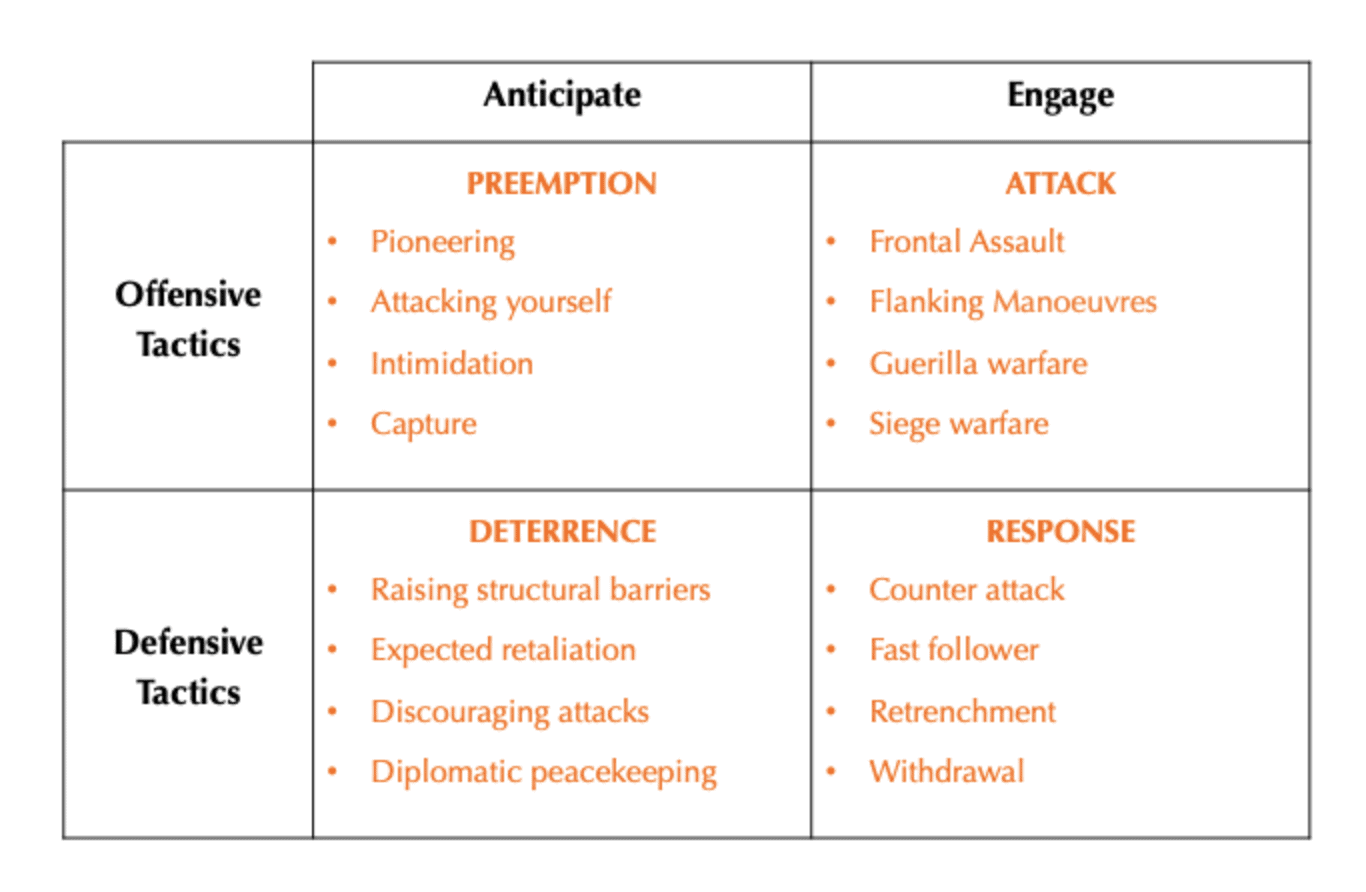
Finally, when preparing your plans for sustaining gains or recovering losses reflect on the following four box matrix and the importance of your defensive and offensive tactics.

Remember every business will hold strategic positions that it must defend at all costs. Do you fully understand yours?

“The Art of War” works well when combined with the additional tools that are available from the Uspire business.  It treats every potential conflict as important to the overall success and increases awareness of the requirement for high level strategic thinking which is vital in a recovery situation.

Team Leadership In A Crisis – Who Should You Select?

Once you have determined the high level strategy required to resolve and manage your disruption contingency plans it is critical to identify the most effective team leaders.  The best plans and well-structured disaster response programmes will just come undone without the right crisis leadership.

The best people for these roles possess a unique combination of skills and personality, giving them the ability to deliver the business objectives in a highly stressful and often unpredictable situation. Do not think that the answer lies in the seniority of job titles and hierarchy this is not a “golden ticket” to a key role in such a challenging set of circumstances.

Many considered Winston Churchill to be a terrible prime minister during peacetime when progress was about small iterations and maintaining the status quo.  However, his reputation during the war goes without further explanation and his ability to bring about rapid change and to communicate in a positive and engaging way delivered the best results from his team and united the country around a common cause.

My personal experience always draws me towards four key traits, which we have used successfully in almost every challenging situation or to bring about significant strategic change in a business.

I-Q

The right leader needs to have the base intellect and mental agility to manage in an ambiguous situation when new information presents itself because they will need to analyse and act quickly. They realise at times of crisis that its not always about collaboration but the ability to make a decision with limited facts purely based on sound business judgement.  It’s the moment to stop discussion and mobilise the team into action.

I-WILL
This is the leaders commitment and focus on the challenge and the rigour to analyse the information. The base requirement is to set clear plans and objectives with a well defined sense of purpose whilst being able to adapt their style to every situation. Being totally immersed in such a disruptive event requires them to be continuously involved in the flexible, ever evolving, planning and improvement processes, which demands attention to detail and an ability to block out distractions.

I-CAN
The leader needs to have high levels of self-awareness and therefore a confidence in their own abilities without allowing a dominant ego state to prevail. Not all leaders are able to quickly and confidently make decisions in a crisis situation. These decisions are often made without sufficient data collection and this usually becomes the normal pattern when dealing with significantly disruptive events. This will require these key individuals to have the determination but also importantly the resilience to bounce back when the circumstances change the landscape of the challenge.

I-CON 
The most respected quality in a leader is consistency and it is this trait that comes under the most pressure in a crisis situation. The phrase don’t panic must be embraced and adopted and the communication style must achieve a sense of calm. Clearly it goes without saying that the leader must be trusted and respected to achieve this. They must use their personality and character to inspire and empower people with a clear and direct tone of voice and a sense of humility, which can be perfectly defined as “grace under pressure”.

Selecting the most effective leader in a crisis or even to manage a key strategic initiative is an important exercise that requires careful reflection, objectivity and examination. These key individuals possess a combination of the four traits mentioned above which includes objective focus and task focused skills whilst not losing sight of the vision and purpose of the company “bigger picture”.

The tool below is a simple but effective measure of your key people and the relevant performance value drivers (PVD’s) that underpin the I-Q, I-CAN, I-WILL, and I-CON, success traits.

We all have bottom draw appraisals of our key people, which include competencies, and development plans but this quick assessment is weighted for business judgement.

It’s easy to use; score each key individual out of ten, for each bullet point and then create a score based on the average for each PVD e.g. Motivation and Awareness.

For business judgement multiply the final score by two and then add them all together to create an overall score or a percentage out of 100 if you prefer.

The Uspire Network

Chaired by Colin Wright, Chairman and NED of several successful businesses, the Uspire Network brings business coaching to a collection of high potential commercial leaders and SME owners who benefit hugely from the 1-2-1 mentoring and peer based learning workshops. Visit the Network page for more information or contact Colin for a confidential discussion about how The Network can help you and your business.

Using Colour Insights to Understand Stress

Recently we held one of our first Uspire Online Discovery Days and people were able to experience the benefit of colour insights.

As we explored the behaviours of different colour styles under stressful conditions it became apparent that this level of stress for executives in the current environment of crisis management could be a norm and therefore quite challenging for a leader and the team dynamic.

Yellow energy people become manic, impatient, irritable and demanding.

Green become silent, judgemental, impersonal, stubborn and over cautious.

Blue exhibit questioning, deliberate nit picking, aloofness, and become withdrawn and resentful.

Red signals are aggression, impatience, irritability and becoming demanding.

So if highly stressful conditions have escalated and the teams behaviour starts to resemble the pattern above what can you do?

My advice is to encourage people to take more time before responding to questions and you as the leader or meeting facilitator need to own this discipline and create that environment.

Include this in your meeting behaviours or rules of engagement upfront and use the following science to explain.

It was Dr Viktor Frankl who wrote the book “Man’s search for meaning” he and his wife had been held in Nazi concentration camps including Auschwitz, an environment of overwhelming stress and uncertainty. He found the one area that he had total control of under these conditions was the gap between stimulus and response.

“Between stimulus and response there is a space. In that space is our power to choose our response. In our response lies our growth and our freedom.”

In essence our auto response system needs to be controlled because responding to stimuli with resentment, aggression, impatience, criticism, stubbornness, avoidance and indecision will not help the situation. Our developed brain enables us to pause before responding and this is a fundamental part of what makes us human.

We have five unique human capabilities that need to be put to use in this space:-

1. Mindfulness  – our ability to guide our emotions and engage our brains with appropriate focus before deciding on actions.

2. Vision – the ability to see other possibilities, create different solutions and concepts to solve a situation.

3. Conscience – the way we determine right from wrong and where we store our personal values this adds to our capability to make a good rather than bad decision.

4. Strength of character –  our true self the embedded motivational triggers that enable us to determine the appropriate choices.

5. Self-awareness  – our ability to take a third dimensional view of ourselves and have the realisation of the environment we are in and the individually unique powerful influence that our decisions can make if we do not exhibit respectful control.

How can you improve these qualities in yourself and others? Here are a few tips to consider.

Mindfulness in the work environment

1. Encourage people to pause before answering. Get them to write thoughts down ahead of giving a reply.

2. Make sure people are in the room and focused on the topic. Avoid distractions.

3. Declutter your meeting rooms

4. Be patient. Don’t rush peoples thought processes issue the questions or required outcomes ahead of a meeting.

5. Be relaxed when you get into the room. Go for a break or walk five to ten minutes before the meeting.

Vision and imagination

1. Ask the right challenging questions

2. Tell relevant stories

3. Anchor expert opinion

4. Broaden the perspective and move outside the boundaries

5. Create a quantity rota (the number of ideas on the table before narrowing down the options)

Conscience

1. Revisit the company values

2. Give each option a people impact score

3. Lead and facilitate with empathy

4. Deal with the truths, be honest build trust.

5. React quickly to any sense of injustice.

Strength of character

1. Exhibit and practise self control

2. Encourage and promote contentment

3. Use a mentor or coach for support and ask them to become your external “accountability partner”

4. Document and list the teams and your successes

5. Develop personal brand statements….the who you are and who you want to become.

Self-awareness

1. Explore and participate in self-development workshops

2. Get to understand your emotional kryptonite

3. Ask for feedback and spend a few minutes at the end of the meeting to ask how people felt it went and did everyone say what they needed?

4. Understand your personal value set and any cognitive distortions (mental habits that hinder us)

5. Monitor your self-talk and say no or stop to negative thoughts.

Chaired by Colin Wright, Chairman and NED for several successful businesses, the Uspire Midlands POD brings business coaching in the Midlands to a collection of high potential commercial leaders and SME owners who benefit hugely from the 1-2-1 mentoring and peer based learning workshops. Visit the Midlands Network POD page for more information or contact Colin for a confidential discussion about how The Network can help you and your business.

Leadership Lessons From Sport

Mark Francis – Uspire Director of Learning

Aduke Onafowokan is founder of the Sister Sister Network and host of the Arise Summit, at which she asked me to share my top five leadership lessons from sport.

The theme which pervades all five tips is that talent alone is never enough, and that helping individuals believe in their world-beating capability is the key role of management.

I have had the pleasure of playing and coaching at international level in rugby and it’s from that sport that my first tip comes:

Dream Big

I worked with the Scottish Women’s rugby team from formation in 1993 to being Champions of Europe 5 years later. On day one I asked the fledgling player group what they wanted more than anything and to a woman they said ‘Beat England’. I knew then I needed to stretch this thinking beyond the parochial and instead I asked what real excellence would look and feel like.

From that question we created a vision of being ‘Cheered by the crowd wherever we play because of the way we play’. Notice how the focus changes from a one-off victory, ‘Beat England’, to a higher intention of quality performance which even gets opposition fans cheering us.

Train the way you mean to play

I’ve spent time with gold medal winning Olympians Linford Christie, Daley Thompson and Denise Lewis; what struck me as exceptional was their focus and work ethic in training. They all embraced training as a joyful not routine part of their job; famously Daley used to train hardest on Christmas Day, inspired in the knowledge that his rivals were taking the day off

Make ‘state of mind’ tangible

I helped AFC Wimbledon gain their professional league status in 2011 by seeding two states of mind with the players; Be a lion at the start of the game – proud, big-chested and confident and then in adversity be a dog, scrapping for every morsel as well.

The team purchased a huge cuddly toy Lion and woolly St Bernard Dog to have with them in the pre-match warm up and on the coach travelling to the games. In the semi-final the team won by a record margin 8-1 and in the final they won through on penalties.

Establish everyone as a leader

When I coached Richmond Women’s rugby team in the 1990’s we set a goal of becoming European Champions. In the first few seasons I was a talkative coach before, during and after matches and we were good, but not great. When I learned to give space for each individual to play a distinct role for the team, the performance level changed dramatically. We had plenty of natural talent but once everyone knew that proactive decision-making during games was everyone’s remit, the team became unbeatable. We won four consecutive European Championships.

Train your mind as much as your body

I was asked to help an injured Canadian basketball player cope with a long period out of the game. Instead of just chatting and feeling sorry for ourselves, we set up a daily visioning routine in which he pictured himself scoring 3 pointers – these are especially difficult shots from long distance. In the American professional leagues the average success rate of this type of shot is 35% and Tony’s average before injury was just 27.5%. When he came back from injury, his 3-point average was an incredible 42% having not played for 14 months.

Have a think about how you can apply these insights in pursuit of your big dreams too!

Mark Francis
Director of Learning at Uspire